
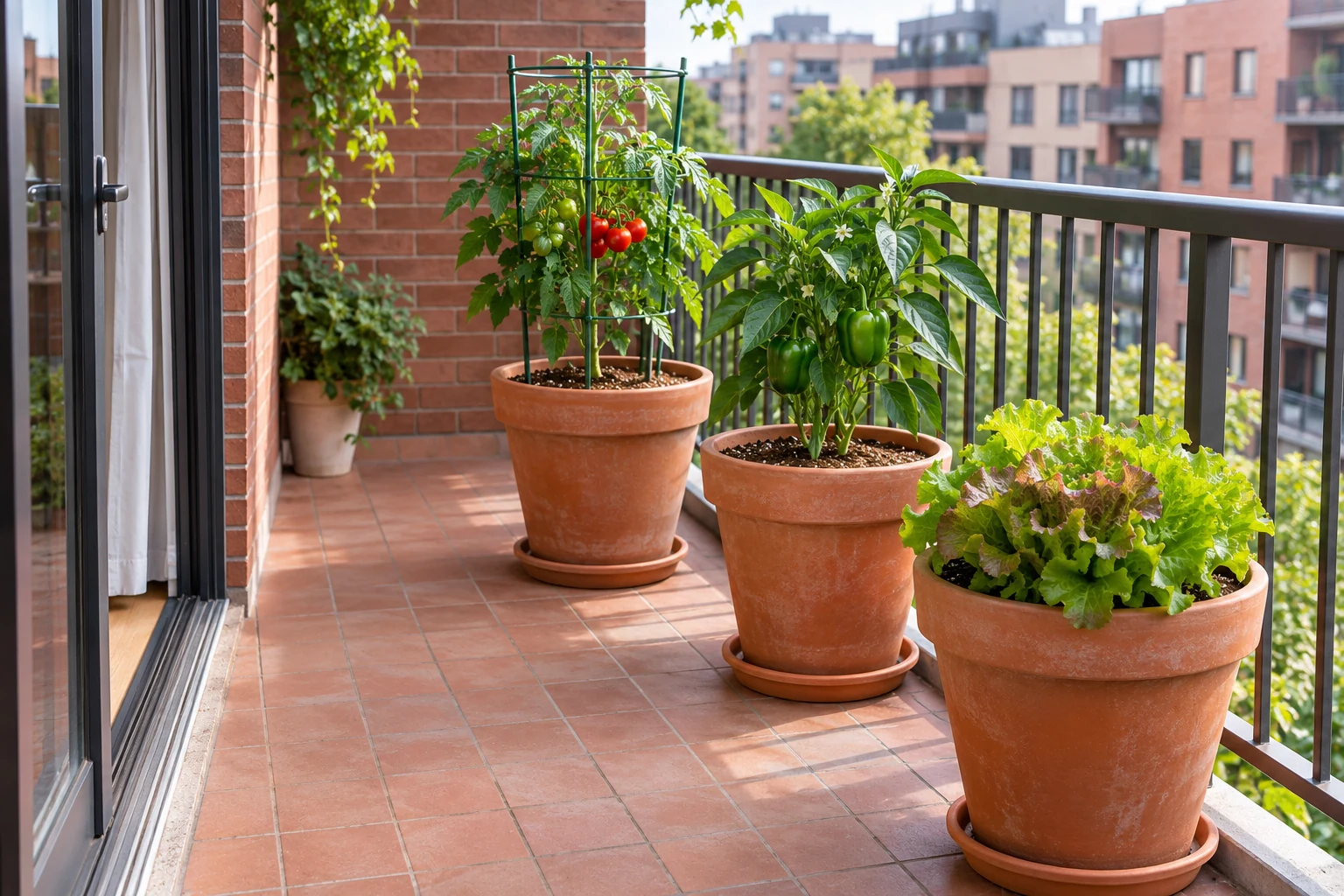
Prepping at a glance
- Check sunlight, building rules, and structural capacity.
- Choose containers and growing media suited to each crop.
- Plan watering before planting several pots.
Check the site before buying pots
Container vegetable gardening makes food growing possible in places without an in-ground bed, but the site still sets the limits. Observe sun and shade through the day, note wind exposure, and identify a convenient water source. Check building or rental rules before setting up a balcony food garden.
Containers, wet growing medium, water, and people create a combined load. Do not guess at a balcony's or rooftop's capacity; ask the building manager or a qualified professional if it is uncertain. Keep exits and access routes clear, and consider where drainage water will go so the garden does not create damage or a problem for neighbors below.
Match the container to the mature plant
Choose a container with adequate space for the particular crop and a way for excess water to drain. A small decorative pot may look sufficient beside a young transplant but become impractical as the plant grows. Use clean, suitable containers with known histories rather than repurposing vessels that held hazardous materials.
The University of Maryland Extension container guide explains crop and container choices. Use appropriate potting media and follow crop-specific feeding guidance. Garden soil is not automatically a suitable substitute in a pot. Include the cost and weight of growing medium when comparing containers; the pot itself is only part of the project.
Choose a small menu of vegetables in containers
Start with foods you regularly use and varieties described as suitable for your space. Leafy vegetables, a compact pepper, or an appropriately supported tomato may be candidates, depending on light and season. Avoid planting every attractive nursery transplant in one crowded container. Give each plant the space its directions require.
Arrange pots so you can inspect leaves, reach the soil, and harvest without moving heavy containers each time. Install necessary supports early, using a stable arrangement appropriate to the pot. Label varieties and planting dates. That small record makes it easier to distinguish a successful choice from a plant that merely occupied the best corner by accident.
Build the routine before expanding
Check moisture regularly and adjust watering to conditions and the crop rather than using a rigid schedule regardless of weather. Containers can require frequent attention, especially when exposed to sun and wind. Arrange care for days away; a collection of thirsty pots is not a reliable project if nobody can water them.
Start with a few containers and keep notes on harvests, watering effort, and any pest or drainage problems. If the garden is difficult to maintain, improve placement or reduce the number before adding more. Plan how seasonal pots and supplies will be stored when not in use. A compact garden that fits daily life can provide useful food and practice without turning the balcony or patio into an obstacle course.
