
Prepping at a glance
- Easy depends on climate, timing, and care.
- Choose a few crops rather than planting all ten at once.
- Match mature plant size to the space available.
Define easy for your garden
Easy vegetables to grow are crops that fit your season, site, and available attention. A plant that thrives for a nearby gardener may struggle in a shaded yard or when planted at the wrong time. Start with local planting guidance, then choose varieties sized for your growing space.
For a beginner vegetable garden, the Iowa State University Extension planning guide identifies familiar options including tomatoes, peppers, green beans, potatoes, and zucchini. Local conditions still determine which are sensible first choices. The ten options below are candidates to investigate, not a promise that every crop will be effortless in every region.
Five useful options to consider first
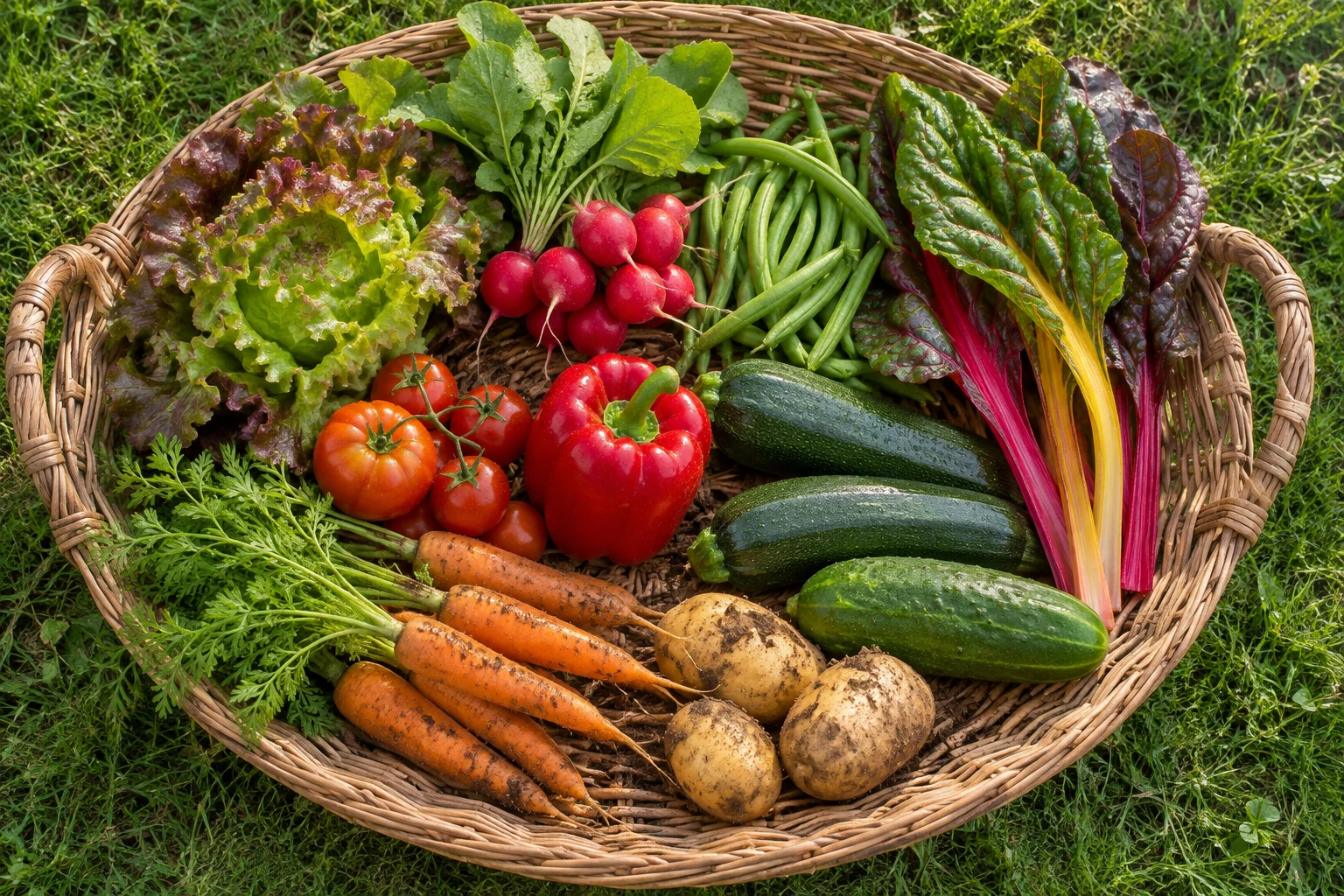
First, consider leaf lettuce if it fits your local cool-season window and meals. Second, radishes can offer a small-scale crop for households that enjoy them; choose a variety and timing suited to your area. Third, bush beans can suit gardeners who prefer not to build the support required by a climbing variety. Fourth, Swiss chard may be useful where you regularly cook leafy vegetables. Fifth, a compact tomato variety can provide a familiar crop if you can supply its light, container or bed space, and support needs.
Choose among these by use. A vegetable that is easy to grow but rarely eaten is not an efficient addition. Write a meal next to each candidate before ordering seeds.
Five more choices with clear space considerations
Sixth, peppers may fit a smaller bed or suitable container, though local season length matters. Seventh, zucchini can be useful where there is adequate room and a plan for regular harvest. Eighth, cucumbers offer another familiar warm-season choice; decide between a suitable compact type and a supported vine. Ninth, carrots are worth considering where the growing medium suits root development. Tenth, potatoes can provide a different kind of harvest when you have appropriate space and crop-specific guidance.
For vegetables for small gardens, NC State Extension's small-space guide compares crop and site considerations. Use mature dimensions and local recommendations rather than squeezing a full-sized plant into a space intended for a compact variety.
Turn the shortlist into a first-season plan
Pick three or four candidates that match your household and growing conditions. Check whether each is best started from seed directly outdoors or acquired as a transplant for your situation. Add planting dates, spacing, supports, and watering access to a one-page plan. Keep room for your hands and tools; accessibility makes routine care much easier.
Record what you harvest and what you actually eat. If a crop performs poorly, distinguish an unsuitable variety from a timing or watering mistake before abandoning it. If a crop produces more than you want, reduce its allocation next year. Success is a repeatable supply of useful food and a clearer understanding of your garden, not growing every vegetable on a beginner list.
