
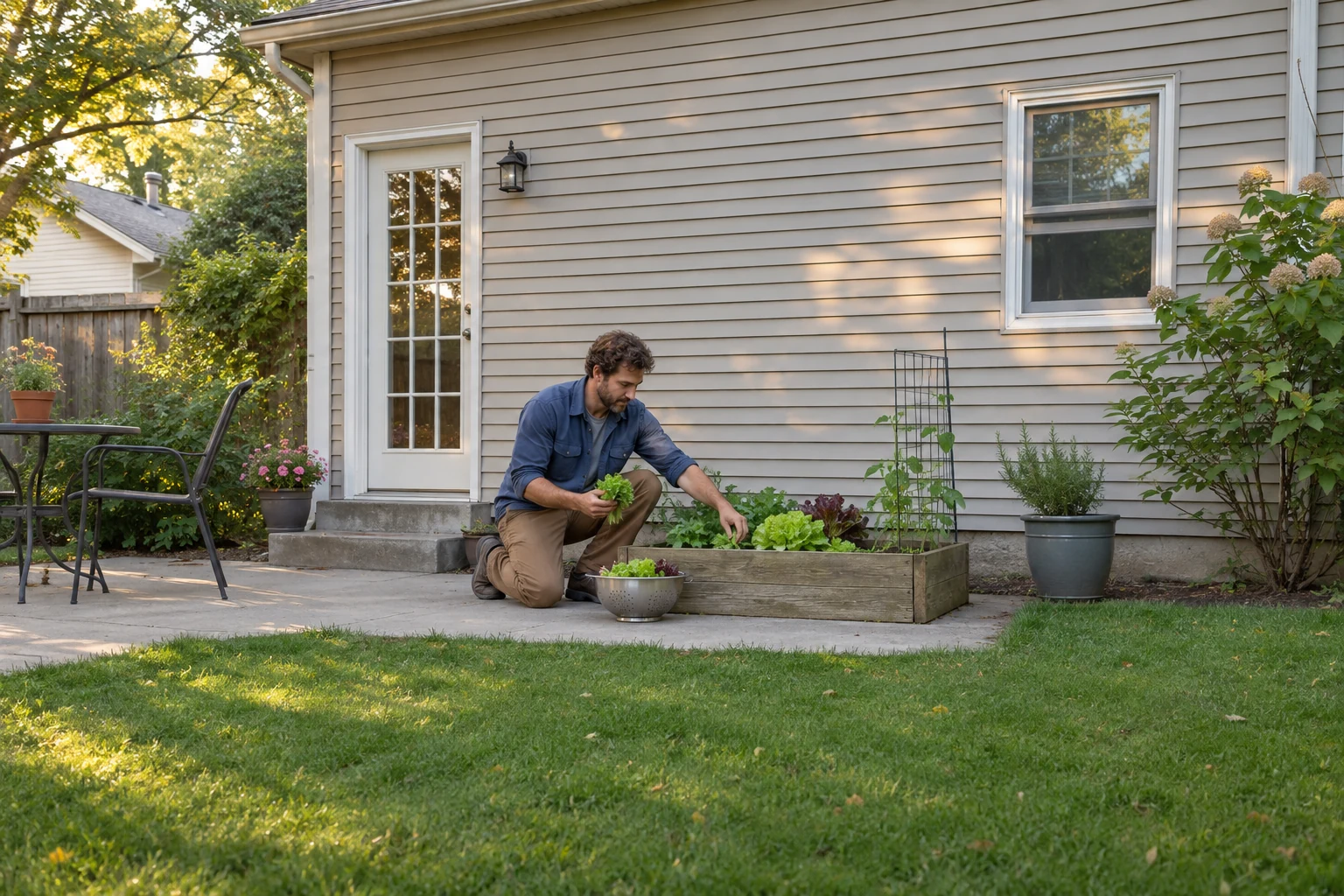
Prepping at a glance
- Begin with a project that solves a household need.
- Budget recurring time as carefully as equipment costs.
- Use a full season of experience before scaling up.
Define what you want to do yourself
Homesteading for beginners does not require owning acreage. It can begin with growing a few vegetables, learning a safe preservation method, maintaining tools, or reducing food waste. Choose an activity that answers a specific household need. Wanting fresh herbs for dinner is a clearer starting point than wanting to become entirely self-sufficient.
Write down the result you hope to achieve and how you will recognize progress. A first goal might be harvesting salad ingredients regularly or using garden produce before it spoils. Avoid making every household necessity your first project. A few dependable skills can make everyday life more resilient without becoming a second full-time job.
Inventory your limits and advantages
Small scale homesteading starts with what you can actually maintain. List available space, sunlight, water access, storage, physical abilities, and time during a busy week. Include lease restrictions, neighborhood rules, and any local requirements relevant to the project. Permission to grow a container tomato does not establish permission to keep poultry or install a large structure.
Identify advantages as well. A sunny doorstep, an experienced neighbor, a nearby extension class, or a reliable kitchen workspace can be more valuable initially than expensive equipment. For a garden project, University of Maryland Extension's planning guide provides a useful framework for site, crops, and space. Adapt regional guidance to your own location.
Choose beginner homesteading skills that reinforce each other
Pair a modest project with one supporting skill. A small vegetable bed goes well with learning how to observe soil moisture. A pantry project pairs naturally with meal planning and inventory. A food-preservation class is more useful when you have a realistic crop or grocery surplus to practice with.
Keep the first project small enough that mistakes remain affordable. Record supplies purchased, time spent, problems encountered, and useful output. Do not compare your beginning to someone else's established operation. Their photographs rarely show every maintenance task, failed crop, hired service, or purchase behind the result.
Evaluate before expanding
At the end of the season or trial period, ask whether the project made life easier, supplied something valued, or developed a skill you want to continue. Compare ongoing demands with the original expectation. If a garden was neglected during travel, solve watering and coverage before adding more beds. If preserved food remains uneaten, change the menu before preserving a larger batch.
Build the next step from what worked. You might add a second container, learn another tested preservation method, or improve storage rather than buying a major machine. Include a plan for illness, vacations, and changing household schedules. A sustainable homestead is one that can be cared for during an ordinary difficult week, not only when enthusiasm and free time are abundant.
