
Prepping at a glance
- Use calm, concrete explanations.
- Give children practice jobs, not rescue duties.
- Adapt activities to age and individual needs.
Explain the purpose without frightening stories
Prepping with kids works best when the conversation starts with familiar routines. Explain that families plan for interruptions just as they plan a journey or pack for school. Ask what the child already understands and answer the question they asked without adding dramatic possibilities they did not raise.
Emergency preparedness for kids should build familiarity with helpers, information, and simple actions. It should not make children feel responsible for preventing disasters or protecting adults. The Ready.gov Prepare with Pedro activity material offers an age-focused starting point that you can adapt to the child's interests and understanding.
Match the job to the child
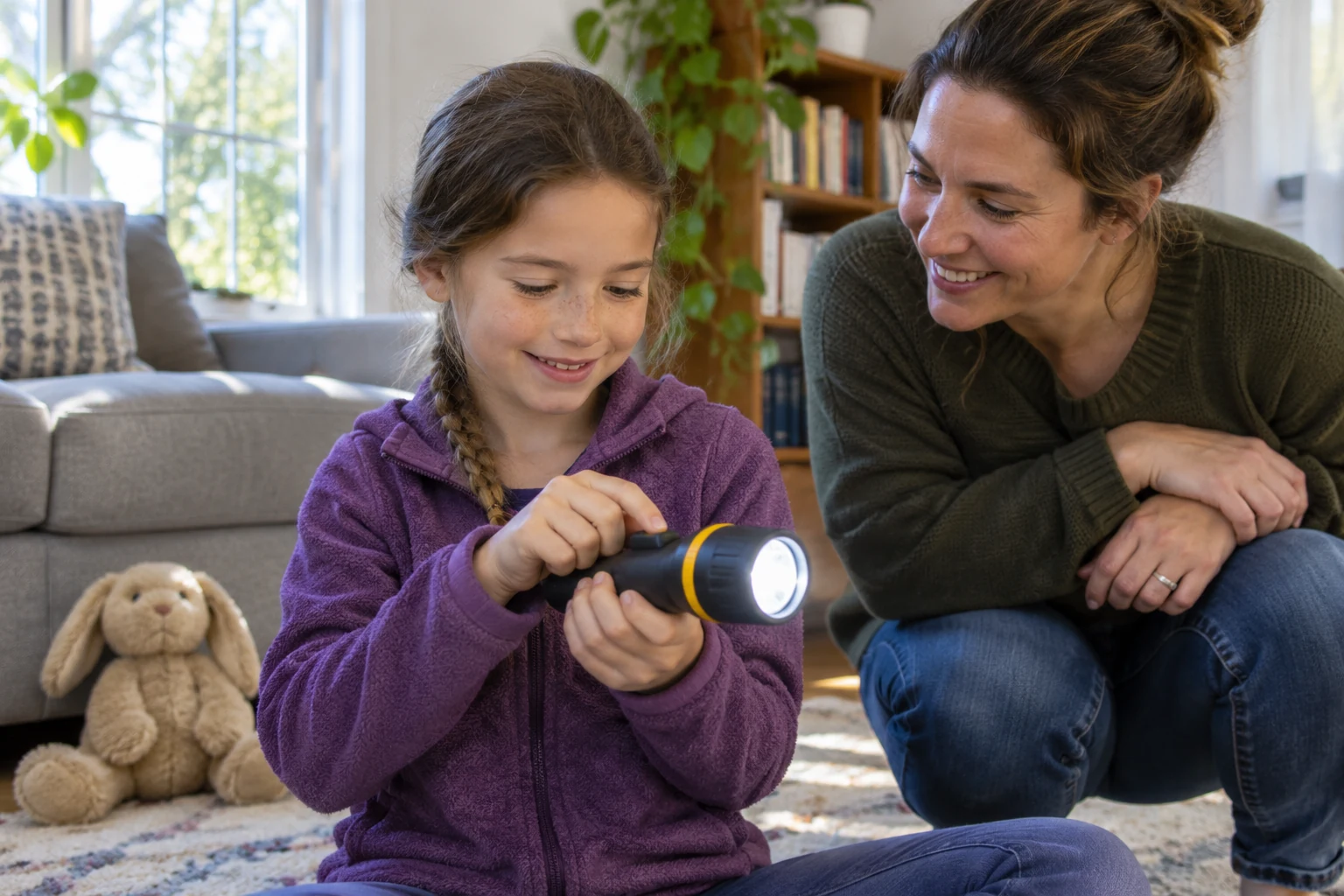
A younger child might help choose a comfort item, point out a meeting place with an adult, or recognize where a flashlight is stored. An older child might help check a contact card or read a supply label. These examples are optional activities, not fixed developmental requirements.
Consider communication, sensory, mobility, and learning needs alongside age. Let a child demonstrate understanding in a way that works for them. Avoid tasks involving fire, chemicals, heavy loads, dangerous tools, re-entering buildings, or supervising another child's safety during an emergency.
Make practice ordinary and short
Try a few minutes of finding the contact card or locating supplies during a calm afternoon. Explain in advance that it is practice. Keep lights, utilities, and essential devices operating; a dramatic simulation can introduce hazards and distract from the skill you want to teach.
Give specific feedback such as: you found the card and knew which adult to ask. If something is confusing, change the instructions or location rather than making the child repeat a stressful exercise. Stop when attention or comfort declines, and return to the activity another day if it remains useful.
Connect the home plan with school
Review school or childcare emergency procedures and authorized pickup arrangements. Adults should confirm the details directly with the organization. A family emergency plan should support those procedures instead of asking a child to leave supervision or improvise a different collection point.
Keep essential contact information current and decide how adults will coordinate if a usual caregiver is unavailable. Explain only the parts the child needs to know. For example, the child may need reassurance that staff and authorized caregivers have a plan, while adults manage the transport and identity details.
Let participation improve the plan
Children often notice practical issues adults overlook: a bag is too heavy, a label cannot be read, or a comfort item is in another room. Invite those observations and make reasonable changes. Familiar food, clothing, and routines can be part of planning without pretending they remove every difficulty.
End each activity with a clear stopping point and an ordinary family task. If preparedness discussions repeatedly cause distress, reduce the exposure and seek support appropriate to the child's needs. The goal is a household plan in which children know a few useful actions and trust adults to carry the larger responsibilities.
