
Prepping at a glance
- Give each purchase a clear job.
- Check supplies for usability and maintenance.
- Share responsibilities before a disruption.
Mistakes 1–3: shopping before planning
Beginner prepping mistakes often start with a purchase that has no clearly defined purpose. Mistake one is copying somebody else's kit without considering your household. Write the problem an item solves before adding it to a cart. Different homes, health needs, and local hazards require different choices.
Mistake two is buying duplicates because existing supplies are scattered. Inventory first. Mistake three is spending money needed for ordinary essentials on optional gear. Set a limit based on available funds, and recognize that written contacts, organized documents, and a household conversation can be useful free tasks.
Mistakes 4–5: counting items instead of usability
Mistake four is buying unfamiliar food without planning meals. Check portions, dietary needs, opening tools, and preparation requirements. A full shelf does not show how long a household can eat if its contents require equipment or water you have not included.
Mistake five is accepting a ready-made emergency supplies checklist without adapting it. Ask whether someone can open, read, carry, and use each item. Medical and accessibility needs require specific arrangements, often with providers. A large assortment of generic supplies cannot substitute for those conversations.
Mistakes 6–7: forgetting power and upkeep
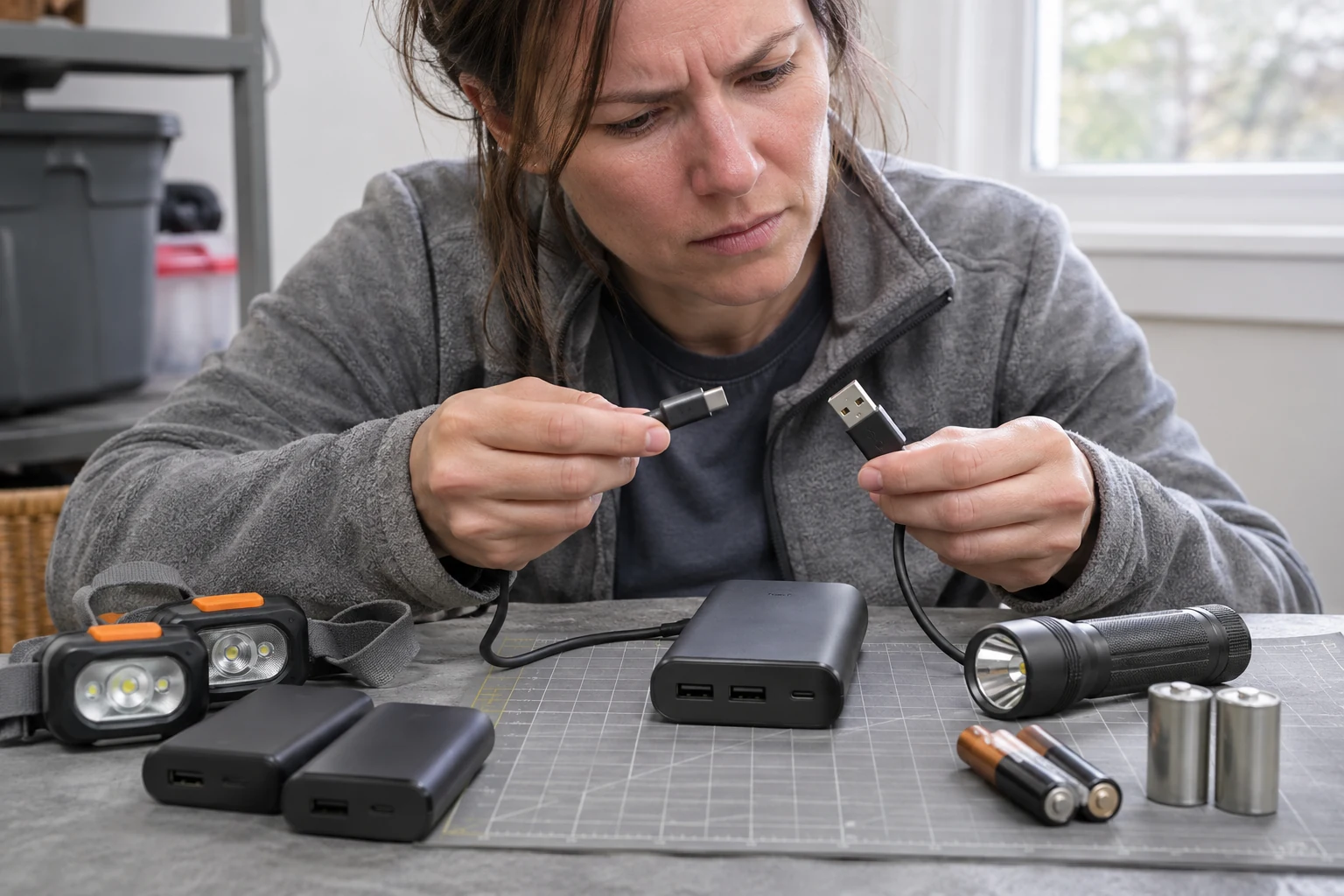
Mistake six is assuming equipment works because it is new. Read the manual, check compatibility, and practice safe basic operation under normal conditions. A charger with the wrong connector or a radio with unfamiliar controls may be much less useful than expected when time is limited.
Mistake seven is storing items and never reviewing them. Follow manufacturer maintenance instructions, replace used consumables, and inspect suitable storage conditions. Put review tasks into an existing routine so they are less likely to be forgotten. Prepping for beginners becomes easier when upkeep is planned before the collection grows.
Mistakes 8–9: keeping the plan in one person's head
Mistake eight is making the household organizer the only person who knows where everything is. Label appropriate locations and explain the plan. Ask someone else to find a contact or supply without coaching; any difficulty points to an improvement rather than a failure by that person.
Mistake nine is assigning help without confirming it. A relative listed as a driver or emergency contact needs to agree and understand the task. Discuss a backup for important roles. Work and school procedures, pets, and care responsibilities may limit what a helper can realistically do.
Mistakes 10–11: rigid plans and endless expansion
Mistake ten is deciding in advance that you will always stay home or always leave. Prepare for both possibilities and follow the official protective instructions for the actual incident. A bag or stockpile does not change whether a particular location is safe.
Mistake eleven is treating preparation as a project with no stopping point. Choose a modest goal, finish it, and review the result before expanding. The Red Cross planning and supply references can help identify basic functions. Your next improvement should close a known gap, not merely add another item to storage.
