
Prepping at a glance
- Plan transport for every animal.
- Check destination rules in advance.
- Keep identification and veterinary details current.
Include every animal in the household
Emergency preparedness for pets begins with a list of animals and their individual needs. Species, size, temperament, age, and health can all affect transport and care. A plan for a calm dog will not automatically work for a frightened cat, birds, reptiles, or livestock.
The CDC's pet emergency guidance is a useful reference for household planning. Discuss unusual care requirements with your veterinarian and identify who will help if you are away from home. A neighbor should not be expected to catch or handle an unfamiliar animal without an agreed, safe arrangement.
Assemble familiar care supplies
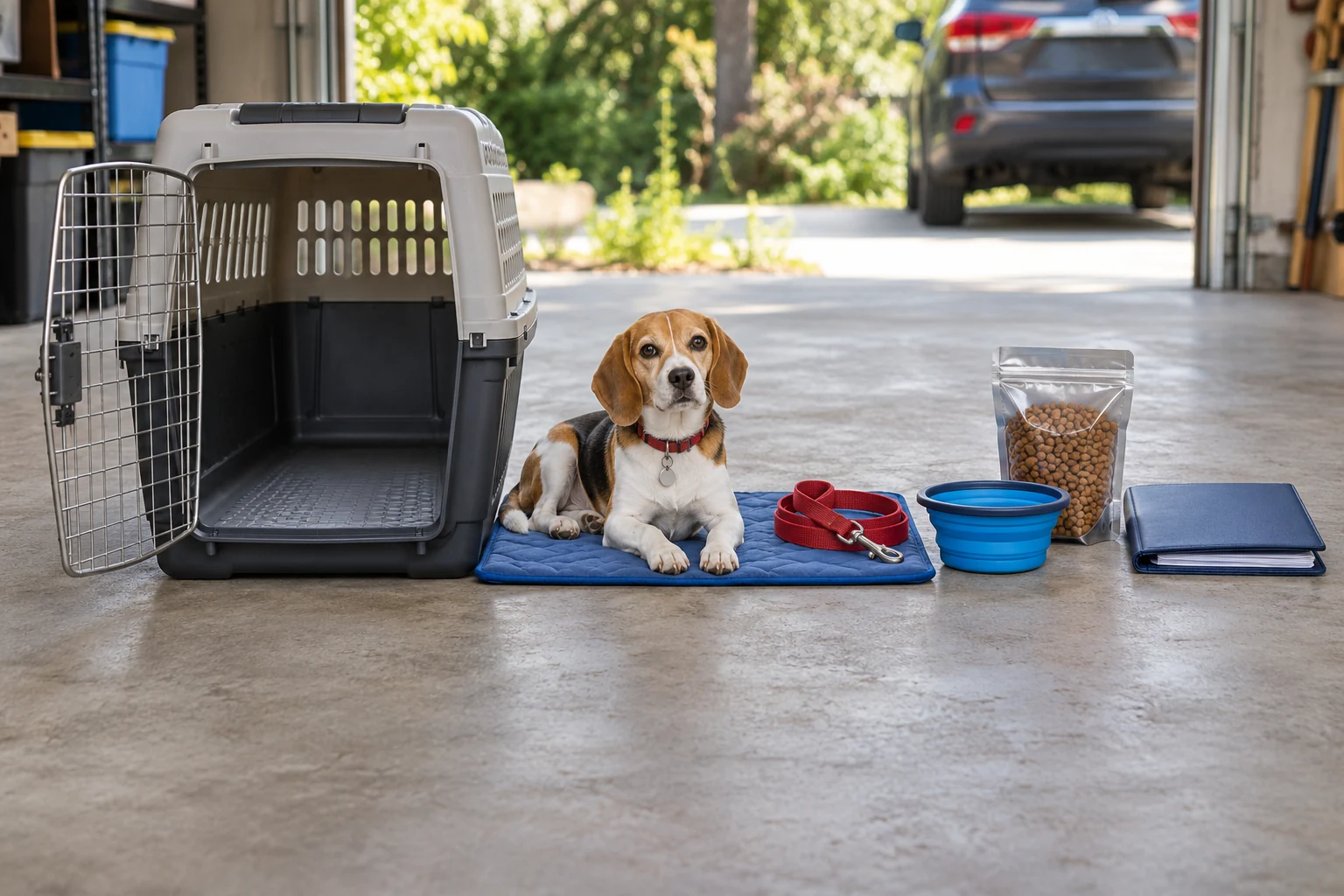
A pet emergency kit should support the animal's normal routine as much as conditions allow. Consider suitable food, water, bowls, hygiene materials, and items needed for handling or confinement. Store supplies appropriately and rotate consumables through ordinary use. Include written instructions another caregiver could follow.
Ask the veterinarian about medication access, storage, and continuity of treatment. Keep prescribed information current and avoid substituting human medicines or changing treatment during a disruption without professional advice. The useful quantity and packaging depend on the animal and the care plan, not a universal online kit list.
Keep identification usable
Check collar tags or other appropriate identification and update registration details where relevant. Keep recent photographs and veterinary contacts with your secure emergency information. Record distinguishing features and ownership information that may help if you become separated.
Make copies accessible to the people authorized to care for the animal. Do not publish private household details broadly in a neighborhood group as a substitute for a secure record. If several animals have similar supplies, label carriers and care instructions clearly enough that a helper can tell which belongs to whom.
Confirm where you can go
A pet evacuation plan needs a destination that accepts the animals involved. Check arrangements with relatives, lodging, boarding facilities, or emergency resources before an incident. Rules and availability differ, so do not assume that every public shelter or hotel can accommodate every pet.
Arrange a backup location and the transport to reach it. Include carriers, restraints, and any environmental needs appropriate to the species. Follow evacuation directions promptly; avoid leaving planning until a departure is urgent. Assistance animals may be covered by different rules, so confirm relevant requirements with the responsible organization.
Practice the difficult part calmly
Many plans fail at the point of loading an animal into transport. Introduce carriers and travel arrangements gradually using methods appropriate for the animal, and seek veterinary or qualified behavior advice if needed. Avoid a stressful surprise drill that creates a risk of injury or escape.
Walk through a simple scenario with the human helpers: who collects each animal, who brings supplies, and who checks that the destination is available? Review the plan after a new pet, treatment change, or move. Keep the routine current enough that an authorized caregiver can carry it out when you are not home.
