
Prepping at a glance
- Protect access to doors and stairs.
- Store by function and frequency of use.
- Confirm building procedures with management.
Start with the building, not a storage bin
Apartment prepping begins with understanding the place you live. Locate permitted exits, learn the building's emergency communication process, and ask management how residents receive important notices. Review fire procedures with the local fire department or building management, particularly in a high-rise where instructions may depend on the building and incident.
The U.S. Fire Administration's escape-planning guidance is a useful starting reference. Keep exits and access routes clear. Do not let stored supplies obstruct a door, hallway, alarm, sprinkler, or electrical equipment. Storage that interferes with escape defeats the purpose of preparing.
Give each space a specific job
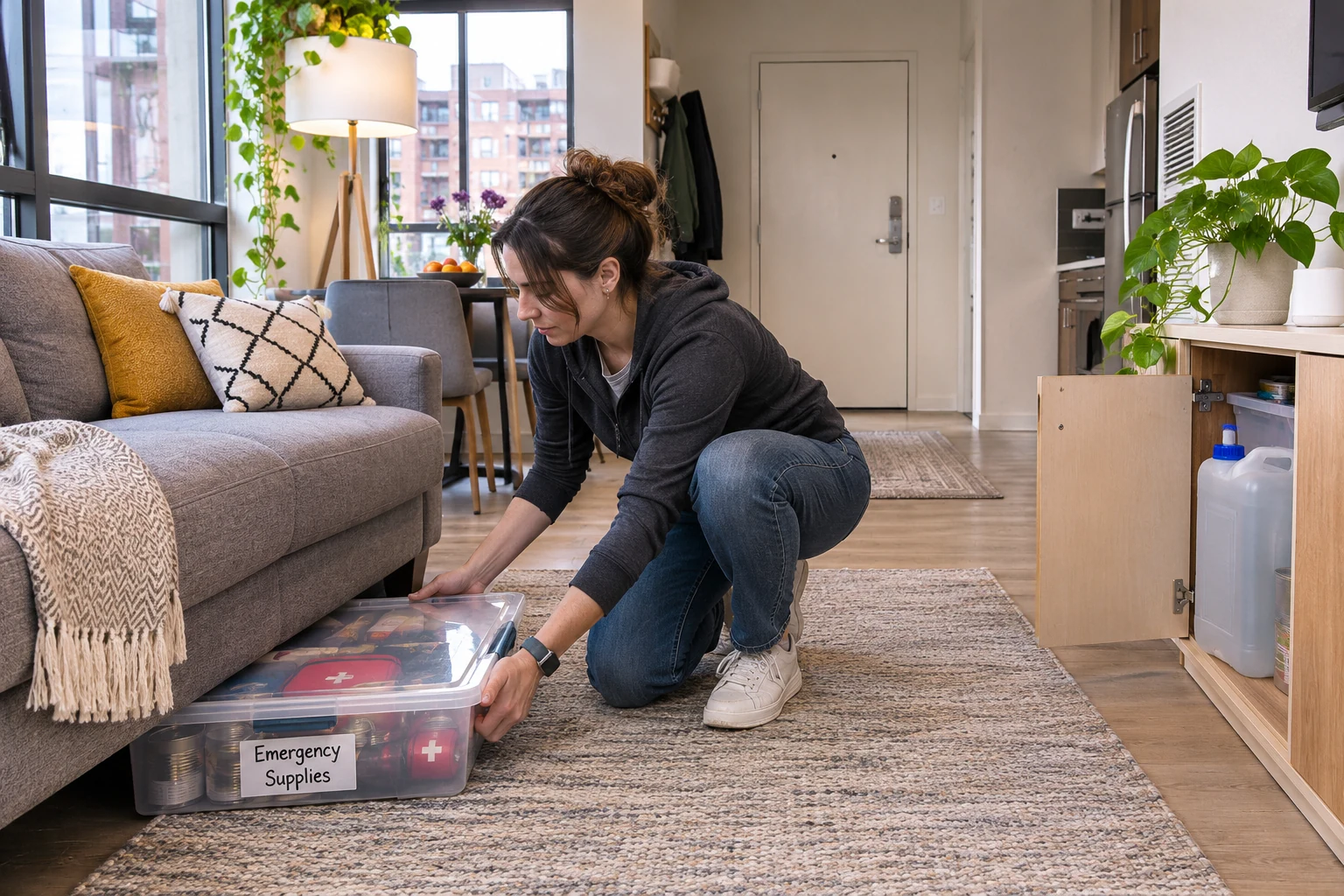
Organize small space emergency supplies around functions: water, food, lighting, documents, and portable essentials. Assign each function a location and write a simple inventory. Several modest containers may be easier to place and carry than one oversized trunk that ends up behind furniture.
Use suitable storage conditions and respect the load limits of shelving and furniture. Water can add substantial weight. Avoid assuming that an attic, hot balcony, or damp utility space is appropriate for every product. Labels and manufacturer instructions matter more than a clever storage photograph.
Adapt the food and water goal
Start with familiar shelf-stable meals that can be eaten without cooking. Check portions and opening tools before adding more packages. A narrow shelf that is routinely rotated can be more useful than a deep box of unfamiliar food that is never inspected.
Use the CDC water guidance to calculate a first goal and identify remaining storage constraints. Build toward the goal in manageable containers rather than treating a lack of space as a reason to have no supply. Do not convert a rain barrel, decorative vessel, or unsuitable reused container into drinking-water storage without proper guidance.
Plan for shared services
Emergency preparedness for renters includes questions that a homeowner may control directly. Ask who handles utility problems, how maintenance is contacted after hours, and what arrangements exist if elevators are unavailable. If someone needs evacuation assistance, coordinate a realistic plan instead of assuming neighbors or staff can provide physical help.
Check rental and building rules before purchasing equipment or installing anything. Never operate a fuel-burning generator, grill, or outdoor stove indoors or on an enclosed balcony. If a safe permitted arrangement is unavailable, plan meals and backup power around options appropriate for the building rather than trying to bypass the restriction.
Practice leaving with what matters
Pack a manageable portable set of documents, personal essentials, and other needed items. Consider how you would move it while using stairs or helping someone else. Keep medical and accessibility arrangements individualized with relevant providers. Follow the building's actual emergency instructions during an incident.
Try a calm walkthrough with the supplies you intend to take. Notice doors, awkward bags, and anything that requires a key you cannot quickly find. Make one improvement and update the inventory. A small apartment can support useful preparation when the plan respects its limits and keeps essential items accessible.
