
Prepping at a glance
- Use a first milestone and a longer goal.
- Calculate supplies for the whole household.
- Match storage and transport to the plan.
Choose a milestone, not a promise
72 hour emergency preparedness is a useful starting concept because it gives beginners a defined task. It does not mean every disruption ends in three days or that assistance is guaranteed by then. Your longer goal should reflect local guidance, household needs, and what you can store and maintain safely.
Think of the first milestone as the beginning of a system. Once you understand how your household uses its initial supplies, extending the duration becomes a planning exercise rather than an entirely new project. Keep critical medical or accessibility arrangements separate from a generic count of days.
Separate travel from home storage
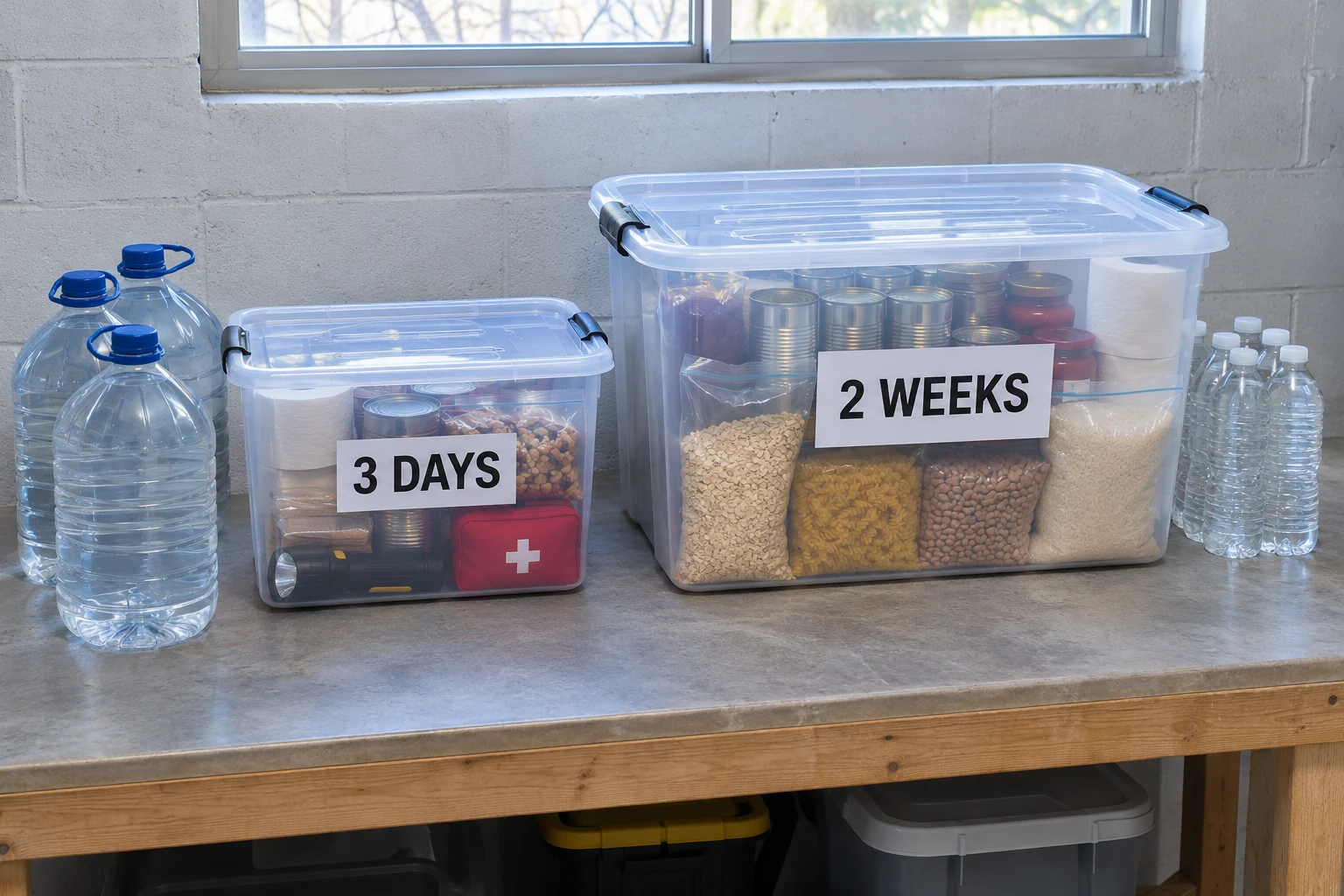
A portable kit and home reserve solve different problems. The Red Cross supply guidance distinguishes a three-day evacuation supply from a two-week home supply. Those are planning recommendations to adapt, not a requirement to carry two weeks of everything on your back.
Lay out the items you might take and test the actual weight and size. Consider who carries other equipment or helps a child or pet. Home reserves can include heavier supplies that stay organized in accessible storage. Do not block exits, overload shelving, or put everyday essentials where they are difficult to reach.
Calculate water before filling shelves
The CDC recommends at least one gallon per person per day for three days and, if possible, a two-week supply. Allow for additional needs such as pets and hot conditions. Write your household calculation down so shopping is based on a quantity rather than the appearance of a full shelf.
A two week emergency supply for one person using that baseline would include fourteen gallons before additional needs. Water is heavy, so distribute storage appropriately and choose containers people can handle. Follow the CDC's storage guidance; do not assume any reused container is suitable for drinking water.
Count meals and daily consumables
For food, sketch the meals people would actually eat. Include preparation needs, dietary restrictions, portions, and the ability to open packages. Then list hygiene items and other daily consumables. Emergency preparedness supplies should be measured in usable coverage, not just the number of cans or packages purchased.
Create a worksheet with columns for item, daily use, days covered, and next gap. Estimate from your own routine where possible, then check the estimate during ordinary use. Medication quantities and storage need a plan with the pharmacist or clinician; do not change treatment or build unauthorized reserves to match a generic timeline.
Extend coverage without losing control
Add another few days of familiar supplies when your budget and space allow. Put purchases into a rotation system and record when equipment needs maintenance. If the larger reserve causes waste or becomes too difficult to manage, improve the system before increasing its size again.
Review the goal after an actual outage or missed shopping trip. Which items were used faster than expected? Which were inaccessible or unsuitable? The most useful duration is one supported by realistic quantities, working equipment, and arrangements your household understands, with a clear next step for the needs still uncovered.
