
Prepping at a glance
- Money and physical supplies solve different problems.
- Protect ordinary essentials before optional purchases.
- Choose the next gap rather than a universal ratio.
Ask what each resource can do
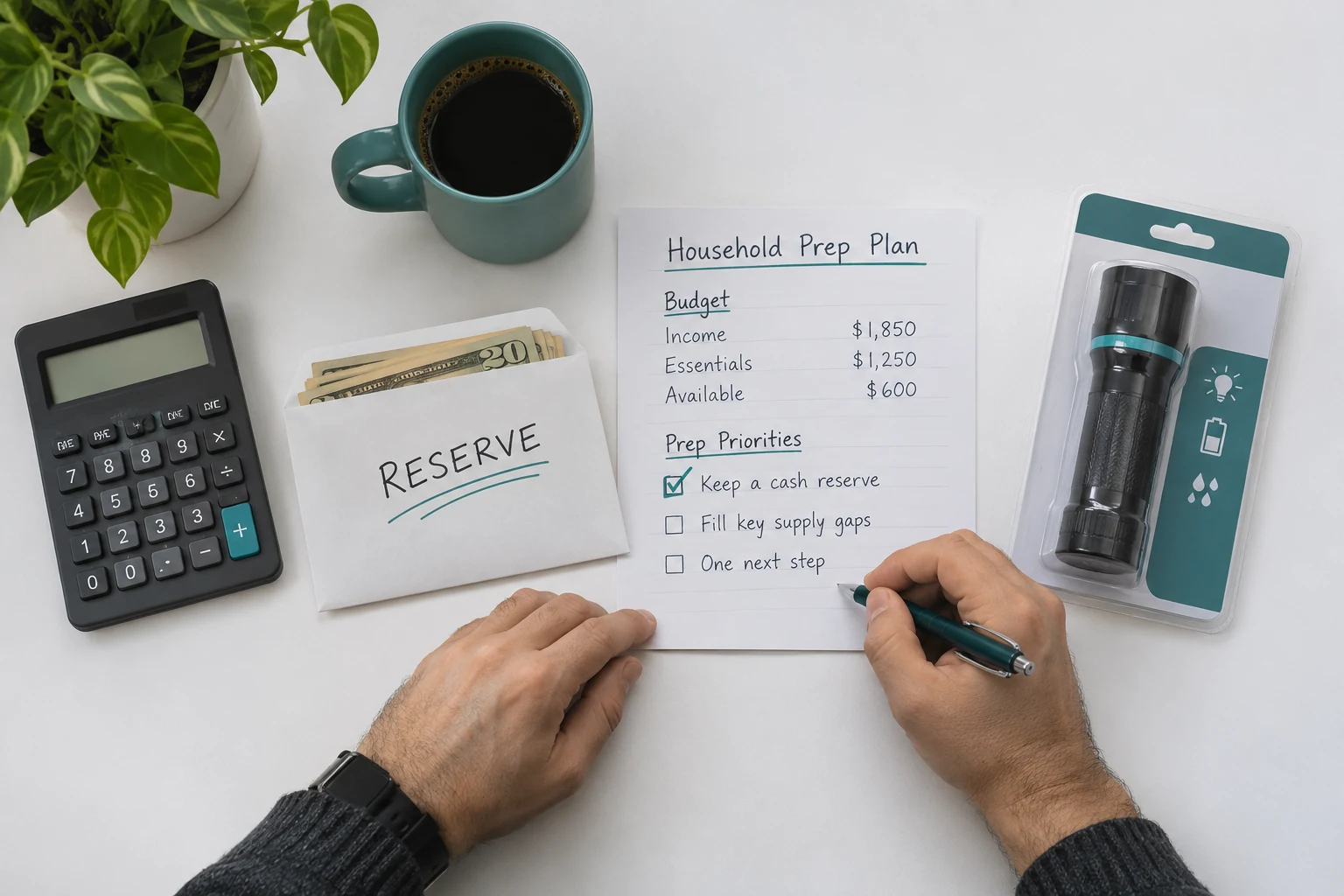
The emergency fund vs emergency supplies question has no universal percentage answer. Savings can help pay for an unexpected repair, transport, or temporary accommodation. Physical supplies can help when shops are closed or ordinary services are interrupted. One does not completely replace the other.
Start by describing the next plausible expense or interruption that would put strain on your household. If a small repair would immediately cause missed bills, that matters. If you have no usable light or drinking-water reserve, that matters too. Comparing actual gaps is more useful than following somebody else's stockpile budget.
Establish the minimum practical foundation
Inventory useful supplies already in the home before calculating a shopping total. Identify basic functions you cannot currently support during a short interruption. Use reliable supply guidance to build a modest first list, then adapt it for medication, accessibility, dietary needs, and pets.
Separate urgent personal requirements from discretionary equipment. A conversation with a provider about essential medical equipment can be more important than buying a general-purpose gadget. Keep regular housing, food, transport, and needed care costs visible while deciding what additional spending is affordable.
Give savings a specific first purpose
Emergency savings are easier to build when the first target is concrete. Consider a common unexpected cost in your own life, such as an essential repair or a short transport disruption. The CFPB guide explains that an appropriate reserve depends on circumstances and that small contributions can still be useful.
Choose an arrangement you understand and can access when needed. Review fees, access limits, and account terms directly rather than assuming all products work alike. This is a household budgeting exercise, not a recommendation to move funds into a particular investment or lock them away for a return.
Compare the next two choices
Suppose you are considering a second premium lantern and have a working light already. Compare that purchase with keeping the same amount available for an unexpected expense. Now imagine the only household light is broken. The same comparison may lead to a different priority.
Prepping on a budget means revisiting the decision when circumstances change. Write three lines: the gap, the consequence if it remains, and the smallest practical improvement. Include free actions such as organizing contacts or checking benefits. You do not need a mathematical allocation rule to identify a useful next step.
Review after using either reserve
When you spend savings or use supplies, record what happened and how you will rebuild. A reserve that helps during a real problem has done its job. Avoid interpreting its use as failure, and do not rush to replace everything at the expense of necessary bills.
Set a regular review that fits your pay cycle. Check whether the cash target, supply quantities, and household needs still make sense. If debt or essential expenses make the choices difficult, seek qualified assistance suited to your circumstances. The aim is a more manageable household, with both practical resources and financial flexibility growing at a sustainable pace.
