
Prepping at a glance
- Verify lawful dwelling, access, water, and wastewater options.
- Calculate power needs before sizing equipment.
- Budget maintenance, replacements, and professional design.
Define the systems you intend to provide
Off grid living for beginners starts with a definition. Do you mean electricity independent of the utility, a property without municipal water and sewer, or a broader effort to produce more household necessities? Write down which services you intend to replace and which you still expect to purchase. Otherwise, an appealing land listing can hide a very different project from the one you imagined.
List essential daily needs: safe water, sanitation, shelter, heating or cooling, food storage, communication, and transportation. Describe what happens if each system fails. Independence from a utility does not remove maintenance; it changes who must arrange it and how quickly help can reach the property.
Investigate the parcel before committing
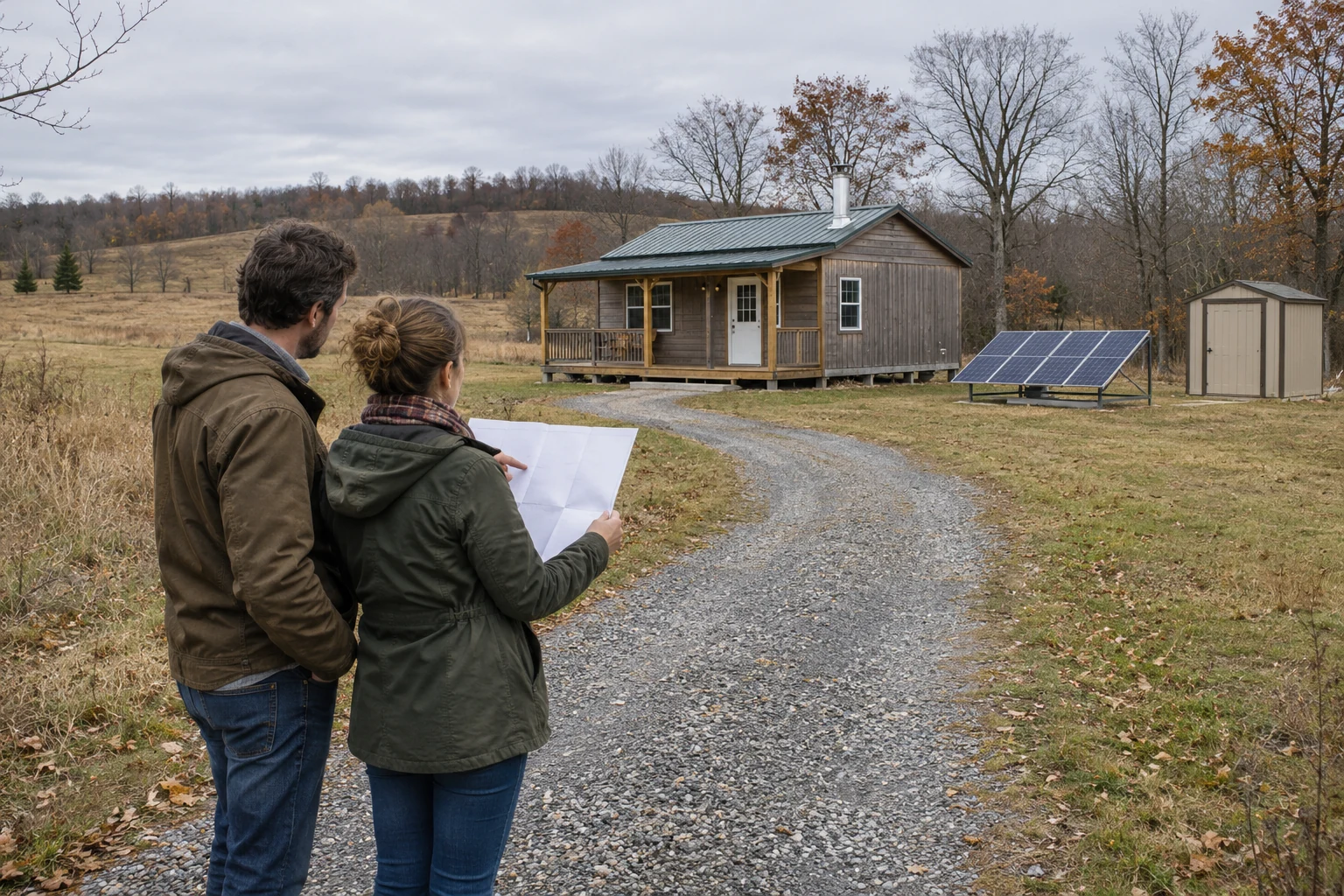
Buying land for off grid living requires property-specific due diligence. Confirm legal access, permitted dwelling use, building requirements, and any restrictions with the relevant authorities and qualified local advisers. Check whether the access road remains usable in bad weather and who maintains it. A low purchase price does not account for an expensive road or an unusable building site.
Verify a lawful, reliable water option and an approved wastewater path. The EPA septic-system FAQ explains that local and state requirements and site assessment matter. Obtain the appropriate evaluation and records rather than assuming any rural lot can support the system you want. Existing equipment also needs inspection; presence is not proof of suitability.
Begin off grid power planning with loads
Record the devices and systems you need to operate, their power demands, and how long they run. Distinguish essential loads from flexible uses, and consider seasonal heating, cooling, and water pumping. A panel count alone does not describe a dependable power system.
The Oklahoma State University solar guide distinguishes stand-alone systems from grid-connected arrangements and explains the need to account for times without sunlight. Use current professional design and quotes for your site; the publication's historical prices are not current estimates. Include storage, controls, installation, maintenance, and a realistic backup plan.
Rehearse the workload and budget the replacements
Before buying land, practice relevant skills where you live: monitoring electricity use, maintaining a modest garden, managing stored water, and following equipment maintenance schedules. Spend time in the target area during its difficult season if practical. Consider travel to healthcare, groceries, work, and repair services, not just the view from the potential homesite.
Build a budget that includes recurring supplies, inspections, fuel, professional service, and eventual replacement of major components. Ask who can maintain the systems if you are ill or away. Keep an exit or temporary-relocation plan for prolonged failures. A viable off-grid home rests on verified infrastructure and manageable routines, with the land purchase following those answers rather than replacing them.
