
Prepping at a glance
- Group produce by temperature and humidity needs.
- Measure proposed storage spaces before filling them.
- Store a trial quantity and inspect it regularly.
Start with crop requirements, not a building project
Root cellar alternatives are useful when you match the crop to an existing storage space. A refrigerator, a suitable cool room, or a dry indoor shelf may each serve particular produce. None is a universal substitute for the conditions required by every vegetable.
The University of Alaska Fairbanks vegetable-storage guide emphasizes temperature, moisture, and ventilation. Its climate examples are Alaskan, so adapt the principles rather than assuming your basement behaves like an Alaska root cellar. Identify what you want to store, its variety, and whether it was harvested and prepared for storage appropriately.
Use several small storage zones
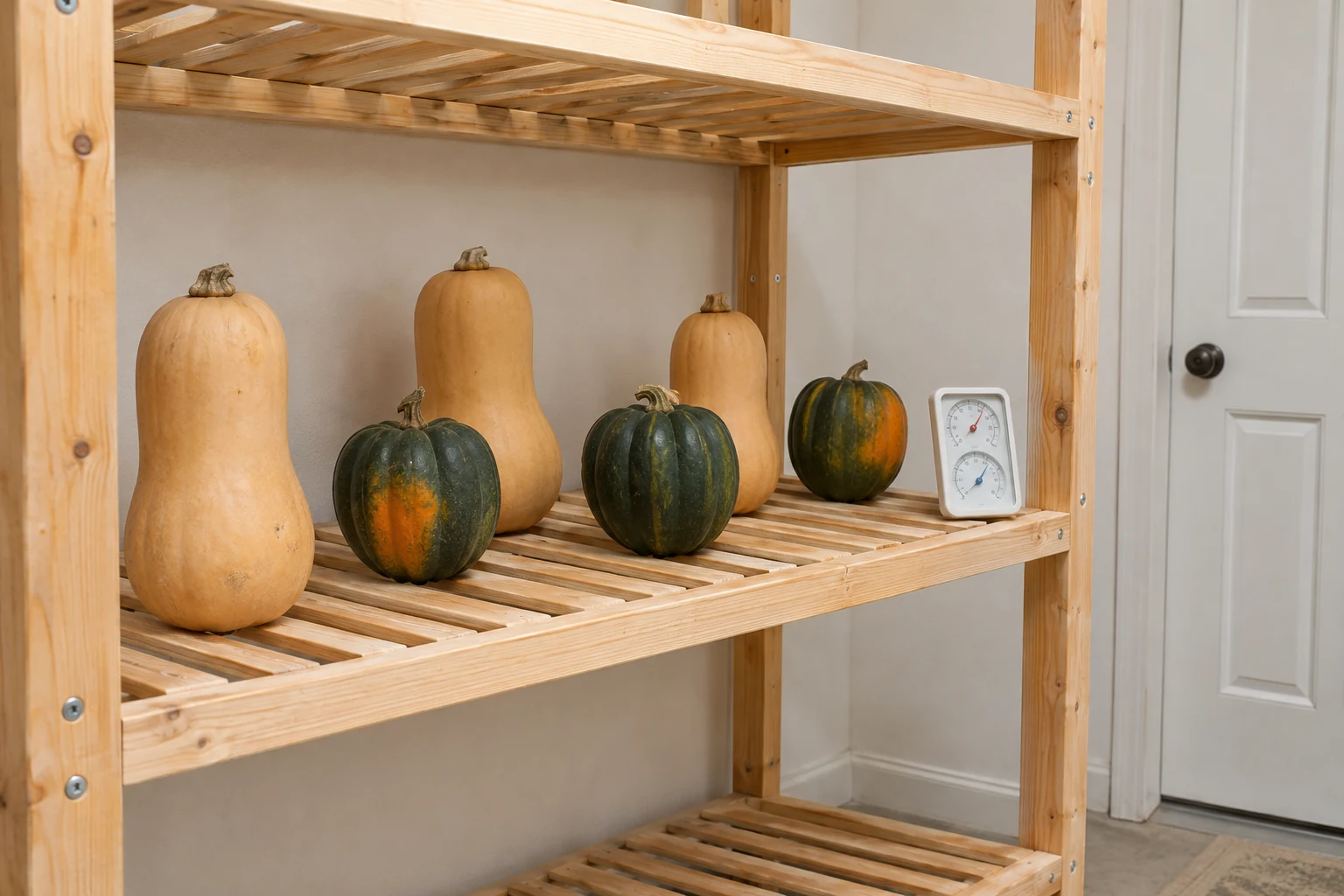
For storing garden vegetables, separate crops with different needs. Many roots favor cold, humid conditions, while properly cured onions need a drier arrangement with air circulation. Winter squash generally needs warmer, drier storage than those roots. Consult crop-specific recommendations before grouping produce in one bin.
A refrigerator may be useful for a modest quantity of suitable vegetables if space and packaging allow. An appropriate dry room may suit a different crop. Check that proposed locations are free from household chemicals, pests, leaks, and damaging temperature swings. Do not choose a garage solely because it feels cool during one afternoon; it may freeze at night or become hot later in the season.
Measure conditions and prepare small quantities
Vegetable storage without a root cellar benefits from a thermometer and, where humidity matters, a way to measure it. Record conditions over time before moving a major harvest into the space. Notice differences between shelves and corners, and keep enough access to inspect the food.
Follow the particular crop's harvest, curing, cleaning, and packaging instructions. Do not put visibly damaged produce into long storage with sound items. Use a modest trial quantity while you learn the location's performance. Containers should make inspection and removal practical rather than concealing a large mass of produce until a problem becomes obvious.
Mark each storage zone on the household inventory, including the amount it can hold without crowding.
Plan a use order and a preservation fallback
List what needs to be eaten soonest and build it into the next meals. Check stored produce regularly and remove items that deteriorate, handling them according to food-safety guidance. Keep notes on useful storage duration under your actual conditions instead of treating a published maximum as a guarantee.
If your home cannot provide the appropriate environment, choose a tested freezing, drying, or canning method for the crop, or grow and purchase smaller quantities. Avoid constructing an improvised underground enclosure without considering drainage, structural safety, and local requirements. A collection of well-managed existing spaces can be enough for a modest harvest, especially when combined with realistic meal planning and a preservation method you already know.
