
Prepping at a glance
- Verify approval markings and purchase through reliable sources.
- Practice the manufacturer’s seal check before an emergency.
- Remember that particulate respirators do not supply oxygen.
Understand the protection being discussed
N95 mask emergency preparedness should begin with the distinction between a tight-fitting particulate respirator and an ordinary loose face covering. An N95 can reduce exposure to airborne particles when appropriately selected and worn, but it is not protection against every airborne hazard. Smoke, infection-control needs, chemical releases, and oxygen-deficient environments require different decisions.
NIOSH wildfire-smoke guidance explains that these disposable respirators do not protect against gases or vapors and do not supply oxygen. Owning one is not permission to enter a fire area or remain where officials direct evacuation. Use it as one part of an exposure-reduction plan, with cleaner indoor air and changed activities where appropriate.
Check the product and try the fit
N95 respirator fit is central to its usefulness. Look for the appropriate NIOSH approval markings and verify products through the official resources linked by NIOSH. Buy from a reliable source, retain packaging and instructions, and avoid assuming that a familiar-looking shape proves approval. Try more than one suitable model or size if the first does not seal properly.
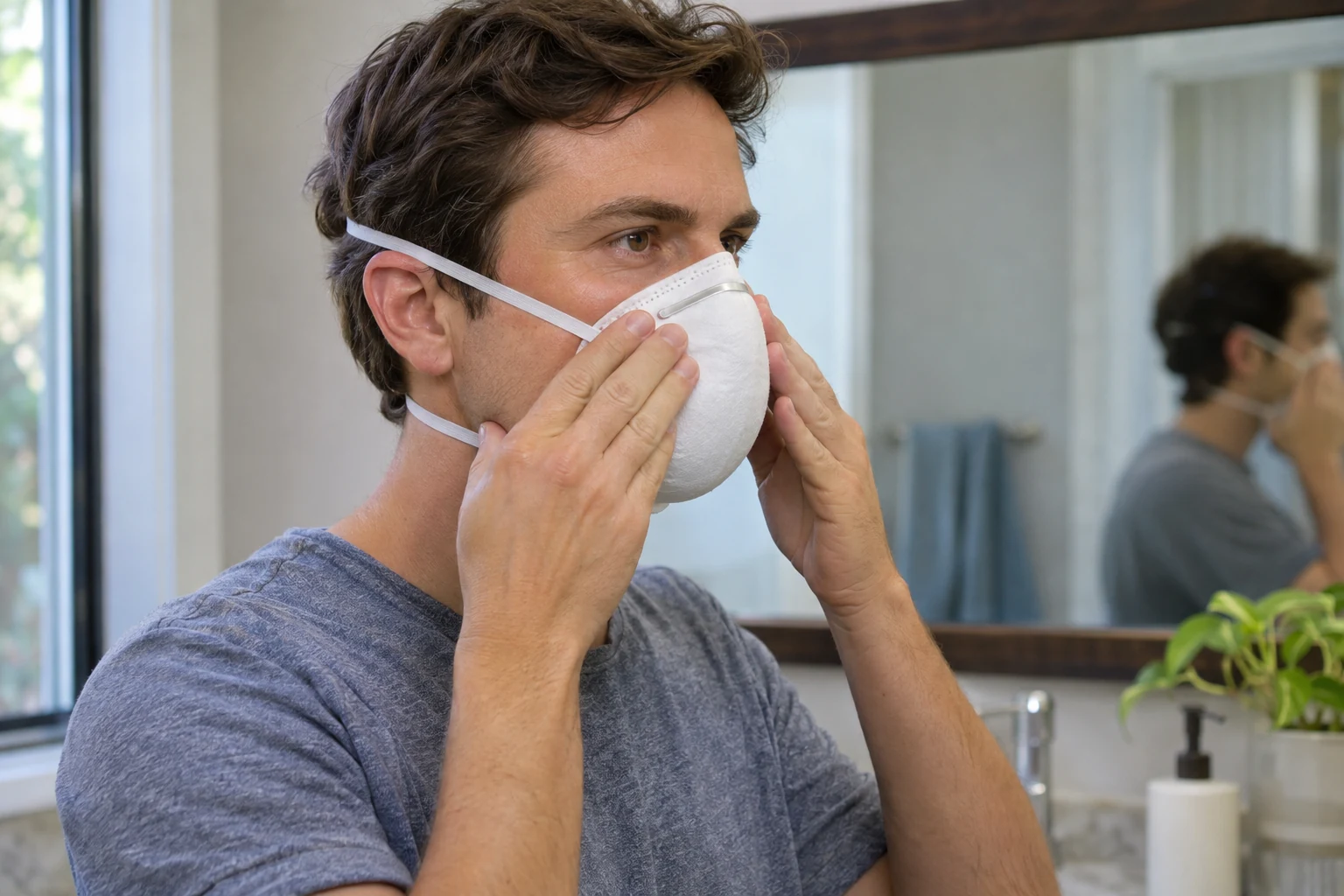
Follow the manufacturer’s user seal-check instructions each time you put it on. Facial hair in the sealing area can interfere with the seal. Do not confuse a home seal check with occupational fit testing. Workplace use may involve additional requirements that a household preparedness article cannot satisfy; ask the employer about the applicable respiratory protection program.
Plan for individual needs and current guidance
Discuss respirator use with a clinician if a health condition makes breathing through one a concern. Children need particular attention to fit and the product’s instructions; do not assume an adult workplace product fits a small face. Masks and respirators are not for children younger than two. If safe, effective use is not feasible, prioritize reducing exposure and finding a suitable cleaner-air location.
For outbreak planning, follow current disease-specific guidance rather than assuming wildfire advice covers all infection-control circumstances. CDC respiratory illness prevention information can help identify the current recommendations and other measures to consider. Keep the decision connected to the person, setting, and actual public health advice.
Keep a small, maintained supply
A respirator storage plan should protect products from moisture, dirt, crushing, and confusion with used items. Follow manufacturer storage, replacement, and disposal instructions. Keep a few suitable options accessible where they may be needed, and record the model that fits each user. Do not remove instructions simply to make the storage box look tidier.
Practice putting on the product calmly before smoke or an outbreak creates urgency. Check whether glasses, hearing aids, or other necessary equipment affect fit or comfort. Avoid altering the respirator to solve a problem without manufacturer guidance. Review supplies periodically, and replace damaged or unsuitable items. A modest collection of appropriate, usable respirators is more valuable than a large stock of products nobody has tried.
