
Prepping at a glance
- Include soap, safe water access, and a way to collect wastewater.
- Pack personal-care items for the people actually using the kit.
- Keep clean supplies separate from used materials.
Pack for the tasks your household performs
An emergency hygiene kit checklist should cover handwashing, dental care, toileting, menstrual care, infant care where relevant, and any prescribed personal-care routines. Start with soap, toothbrushes, toothpaste, toilet paper, suitable waste bags, and the personal products household members normally use. Add protective gloves for appropriate cleanup tasks and keep instructions for any specialized care supplies.
Do not assume that one packet of wipes replaces all hygiene needs. Consider accessibility, skin sensitivities, and the amount of waste a product creates. Ask each person what they need rather than building a kit around one adult’s routine. Keep sensitive personal items discreetly organized so the supplies are comfortable to use in a shared emergency space.
Set up a usable handwashing location
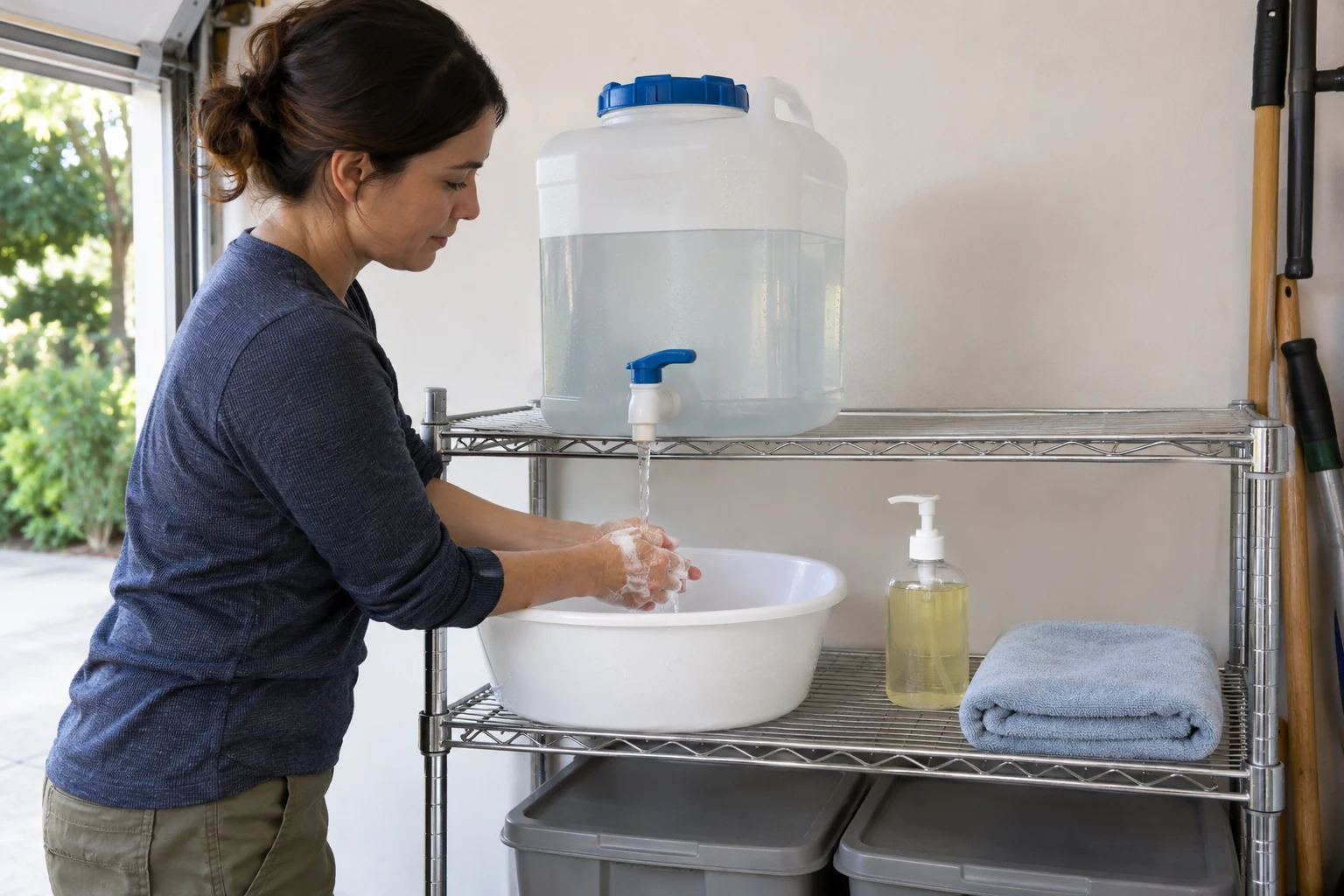
An emergency handwashing station can use a suitable water container with a controllable spout, soap, a basin to catch wastewater, and clean drying materials. Place it where people can reach it safely and where spilled water will not create a fall hazard. Rehearse the arrangement before an outage to check height, stability, and whether a child or seated user can operate it.
CDC emergency hygiene guidance recommends thorough handwashing and identifies alcohol-based sanitizer as an alternative when soap and water are unavailable, with important limitations. Keep sanitizer secured and follow its label. Do not treat it as a way to remove every contaminant or as a substitute for a workable handwashing plan.
Distinguish water uses and local instructions
Water outage hygiene supplies need to be paired with current water-safety information. A boil-water notice, a do-not-drink notice, and a do-not-use notice can have different implications. Follow the instructions issued for your location rather than deciding that all water is acceptable for washing because it looks clear. CDC emergency water guidance is a useful reference alongside those local directions.
Label containers by intended use and keep cleaning chemicals away from drinking-water storage. Allocate appropriate water for necessary care tasks as well as drinking and food preparation. If a medically necessary routine depends on particular water quality or equipment, ask the care provider about a backup procedure before the service interruption occurs.
Manage the used side of the kit
Choose a place for used wipes, gloves, diapers, and other waste that keeps them away from clean supplies, food, and children. Follow local waste and sanitation instructions, especially after flooding or sewage disruption. Do not flush products because their packaging makes an informal claim of convenience; check the plumbing and wastewater guidance that applies to the situation.
After a short practice, note what was missing: a basin, enough drying materials, a reachable spout, or a place to store waste. Restock products through ordinary use and check containers for damage. A useful hygiene kit includes a complete path from clean supplies to safe cleanup, rather than merely a bag of toiletries waiting beside an unusable sink.
