
Prepping at a glance
- Confirm whether wastewater systems are usable before flushing.
- Choose a stable, accessible toilet arrangement.
- Plan waste storage and disposal with local guidance.
Find out which service has failed
An emergency toilet without running water is not always the same problem as a damaged sewer or septic system. Before adding water to flush, confirm that wastewater authorities consider the system usable. A lack of tap water does not prove the drain is safe, and sewage backup or disaster damage can change the answer.
Save the contact information for local water, wastewater, and public health agencies. Ask about their emergency sanitation guidance before a disruption. The Regional Disaster Preparedness Organization’s Emergency Toilet Project offers background on sanitation options after wastewater failure. Use local instructions to determine which approach and disposal arrangements fit your community rather than treating one regional guide as a universal rule.
Compare options by stability and waste handling
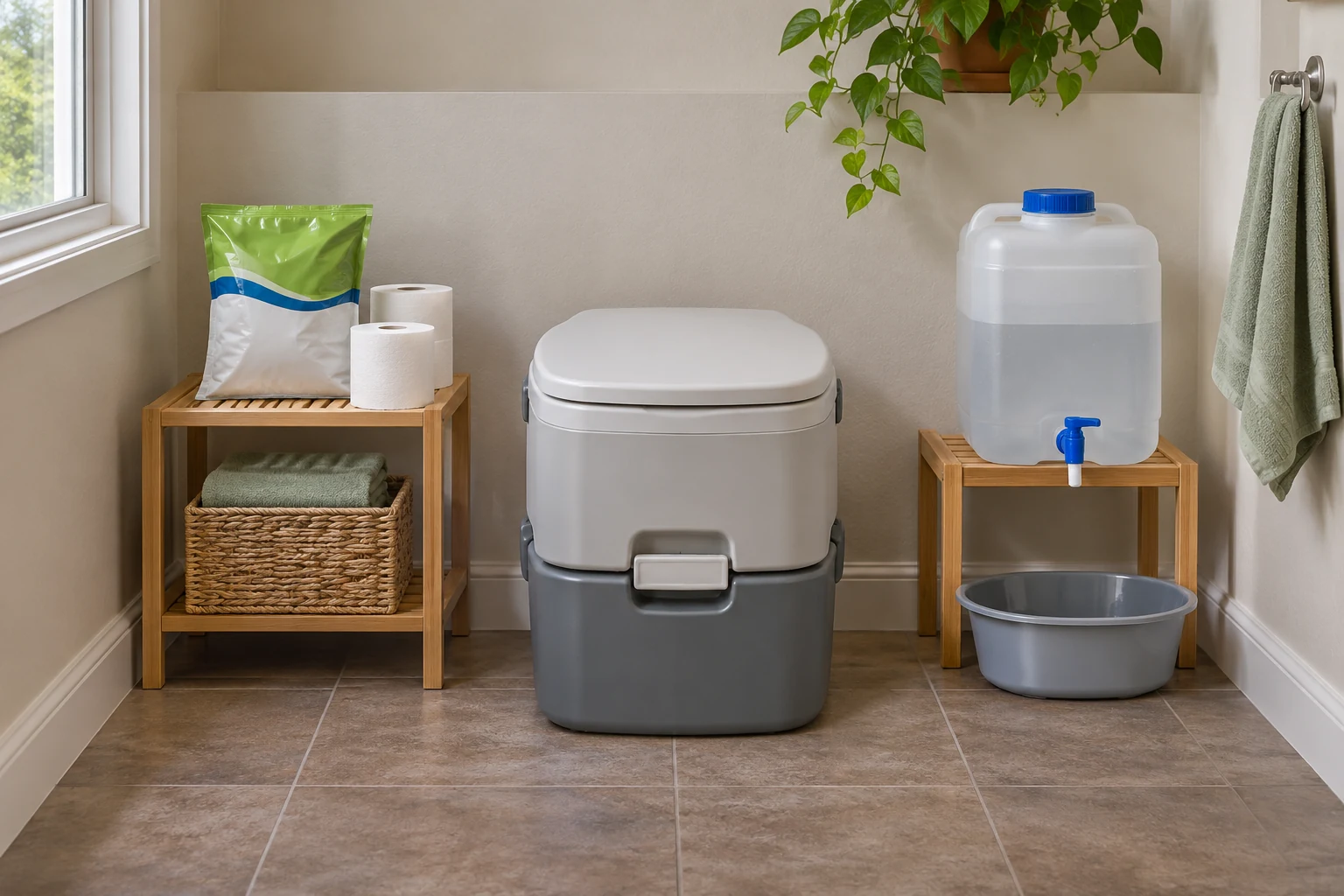
An emergency toilet setup might use a purpose-built portable toilet, an appropriate bag-based system with a stable seat, or a locally recommended container arrangement such as a twin-bucket system. These options differ in storage space, consumables, cleaning, and disposal. Read the complete operating instructions before buying, including what happens to the contents afterward.
Check seat stability, weight limits, transfers, and whether anyone needs assistance. A small camping product may be unsuitable for someone who requires a firm raised seat or room for a mobility aid. Avoid relying on an improvised support that tips or collapses. Privacy matters too: identify a location that can be reached without navigating stairs or clutter in darkness.
Prepare a complete sanitation station
A disaster sanitation plan includes the toilet, compatible liners or other consumables, toilet paper, appropriate cleaning supplies, protective gloves where needed, and a nearby handwashing arrangement. Keep the clean and used sides separate. Label components so guests or caregivers do not have to guess how the system works.
Decide who will check supplies and manage waste, with a backup person if that individual is unavailable. Follow local public health and waste-service directions for storage and final disposal. Do not assume human waste belongs in ordinary trash, a storm drain, the garden, or an improvised pit. Available disposal options depend on the system, the emergency, and local requirements; confirm them rather than postponing the question until containers are full.
Practice the logistics without producing waste
Set up the equipment during normal conditions and check access, lighting, privacy, and the space needed to replace consumables. Read the instructions aloud with another adult. This dry rehearsal can identify missing liners or an unsuitable seat without using the system. Store instructions and supplies together afterward, where they remain accessible.
Review the plan when household mobility or care needs change. Include infant, incontinence, and menstrual-care waste if relevant, and ask care providers about specialized needs. If you cannot maintain a safe and usable sanitation arrangement at home, identify another place to stay or seek local assistance. A toilet plan is complete only when people can use it, wash their hands, and manage the waste appropriately.
