
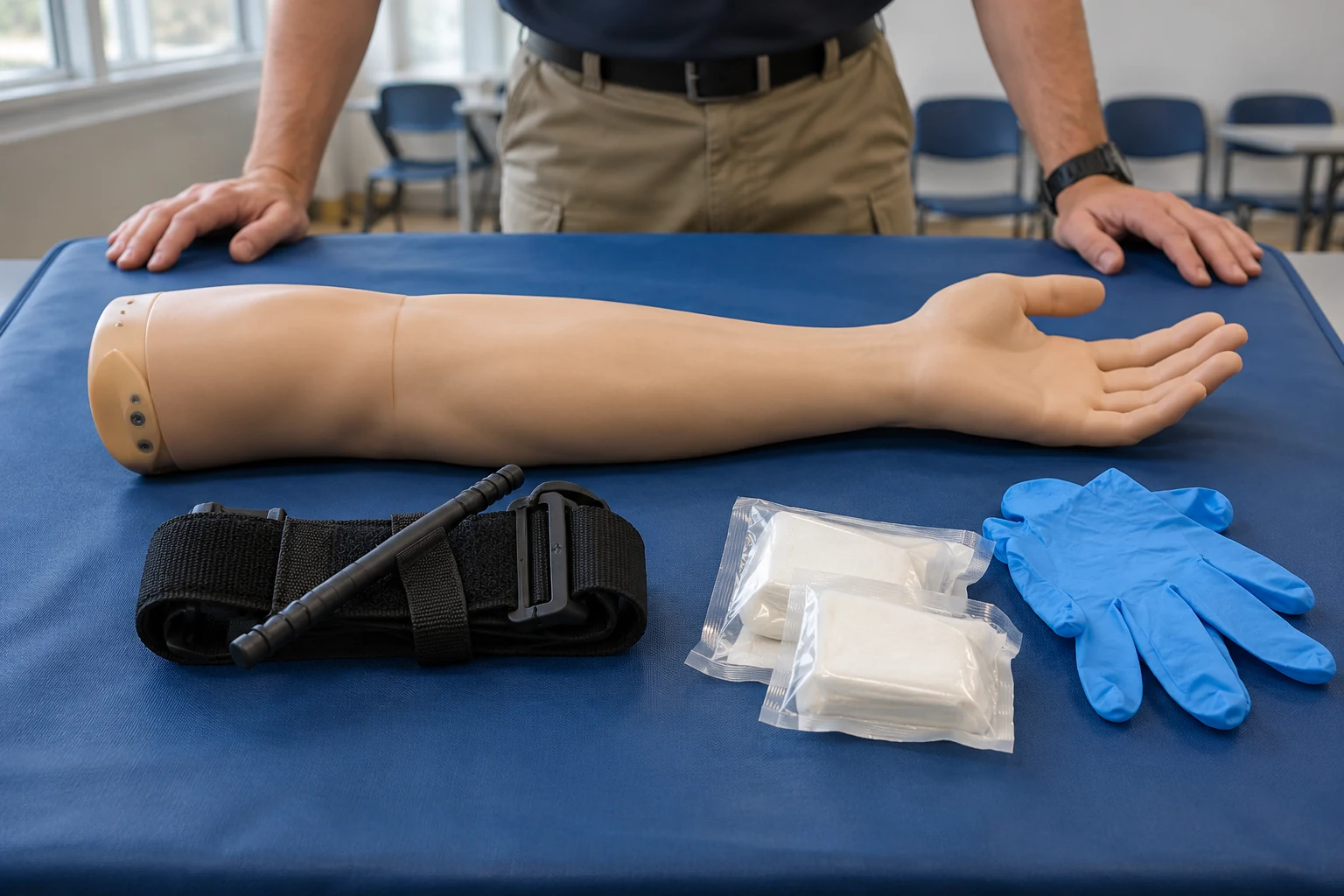
Prepping at a glance
- Pair supplies with practical bleeding-control instruction.
- Separate training equipment from emergency-use items.
- Keep the kit easy to locate and open.
Start with the skill before the shopping list
Bleeding control kit essentials include more than a pouch of equipment. Severe bleeding requires prompt action and emergency medical help, so the first purchase decision should be paired with training. The American College of Surgeons Stop the Bleed program teaches recognition and practical techniques including direct pressure, wound packing, and tourniquet use within appropriate circumstances.
This article is a kit-planning guide, not a substitute for that instruction. Ask the instructor which supplies match the skills you are learning and how to recognize reliable products. Avoid choosing equipment because it looks tactical or because a seller promises that owning it removes the need for professional care.
Choose a small, coherent set of supplies
Bleeding control training can help you select appropriate gauze or dressings, protective gloves, a suitable commercial tourniquet where indicated by the training, and practical tools such as trauma shears. Check the provider’s recommendations and the manufacturer’s instructions for each item. Product quality and suitability matter more than the largest possible component count.
Buy from reliable sources and inspect packaging when supplies arrive. Do not substitute an unfamiliar product simply because it resembles one used in class. Keep a dedicated training item when the instructor recommends it, and clearly distinguish it from equipment reserved for an actual emergency. Repeated practice can affect an item’s condition; follow manufacturer and training guidance about reuse.
Arrange the kit for quick access
Trauma kit organization should make the contents recognizable to another trained person. Keep items in a consistent order, use clear labeling, and avoid overfilling the container. Choose a location that is accessible when needed while remaining appropriate for the household. If the kit travels in a vehicle or work bag, account for storage conditions and the possibility that it will be away from home.
Practice locating and opening the kit during ordinary conditions without breaking sterile packaging. Check whether gloves and other sizes suit the intended users. Put a concise reference from your course with the equipment. A complicated private packing system can become an obstacle when someone else must retrieve an item quickly.
Connect the kit to an emergency response
For life-threatening bleeding, call emergency services and follow trained actions and dispatcher instructions. Check the scene for danger before approaching; additional injured people make the situation worse. Do not let equipment preparation delay summoning help. Know your location and how responders can reach you, particularly at a workplace or outdoor site.
After training, schedule reasonable skills refreshers and inspect the kit for damage, used items, and expiration dates where applicable. Replace compromised supplies and keep the inventory current. Do not add advanced airway tools, needles, or other invasive equipment simply to make the pouch appear complete. A focused kit with practiced skills and a clear emergency contact plan is more useful than a broad collection of tools beyond your training.
