
Prepping at a glance
- Check adult, child, and infant content before booking.
- Choose practical skills feedback rather than relying on reading alone.
- Review any workplace or caregiving certification requirements.
Start with who you may need to help
CPR first aid training for families should reflect the household. If you care for an infant, confirm infant content rather than assuming an adult course covers it. Include regular caregivers in the discussion, and ask about age requirements for younger learners. A family course does not have to mean everyone completes identical training on the same day.
American Red Cross course information shows several formats and training options. Read the specific course description before enrolling. Check whether first aid, CPR, and AED use are included, which ages are covered, and what certificate is issued. If a school, employer, or care role requires certification, verify acceptance with that organization first.
Prioritize feedback on physical skills
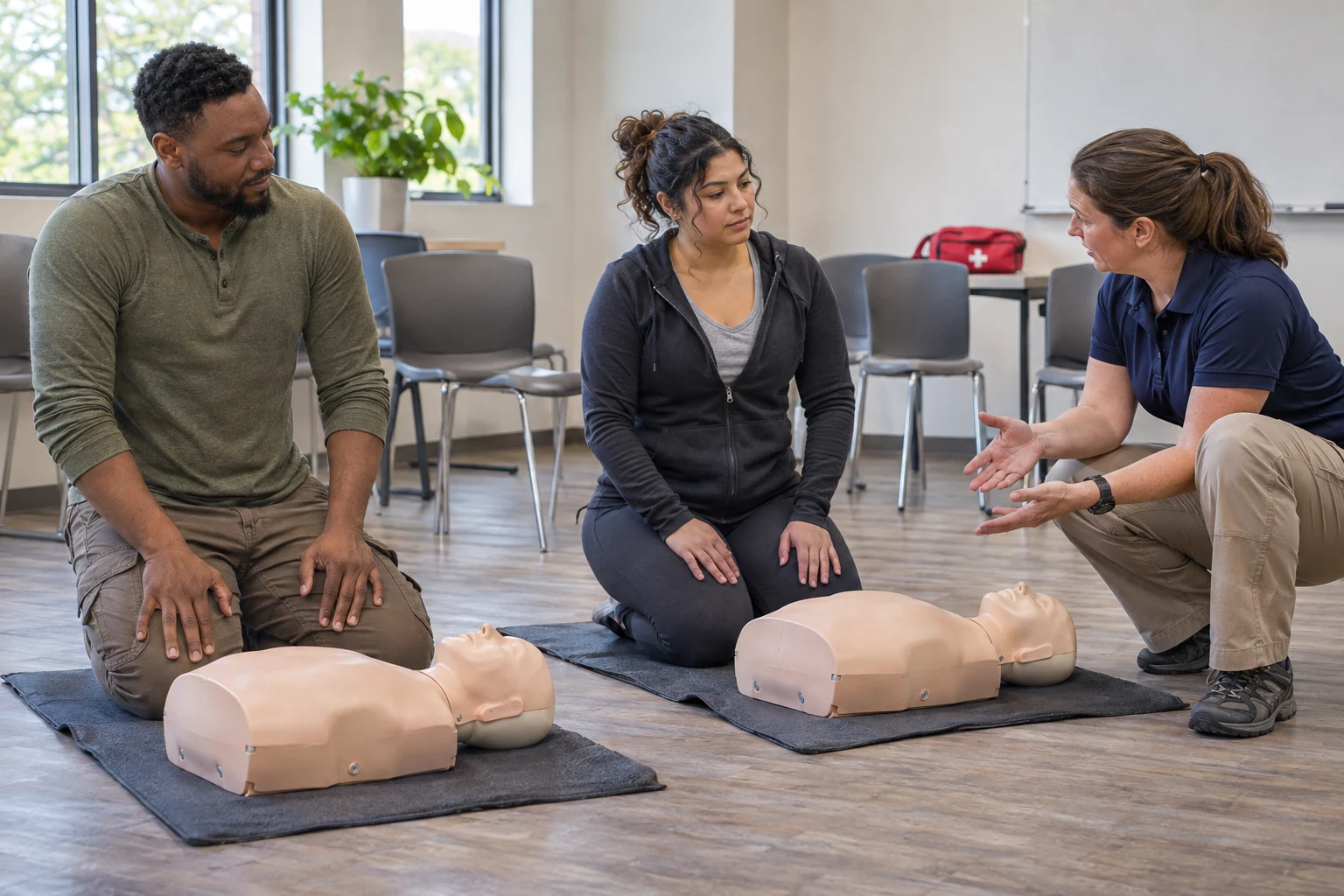
Hands-on CPR practice gives an instructor an opportunity to see what you are doing and help correct it. Online learning can support knowledge and preparation, but it should not be confused with every form of practical assessment. Ask exactly what a blended or classroom course requires and whether skills practice and evaluation are included.
Discuss accessibility needs with the provider before booking. Physical limitations, language needs, hearing access, or anxiety about participation may affect the best arrangement. Ask what accommodations are possible and what is required for certification. A clear conversation is more useful than silently struggling through an unsuitable class or assuming that a certificate can be obtained without meeting its stated requirements.
Learn the household response around the skill
A family first aid course should lead to practical coordination at home. Decide who calls emergency services, who retrieves supplies, and who meets responders when several adults are present. Make sure people know the address and how to describe access problems such as a locked gate or apartment entrance. Keep necessary contact information visible to caregivers.
Teach children age-appropriate actions such as alerting an adult and seeking emergency help, without giving them responsibility beyond their abilities. Do not practice chest compressions or other potentially harmful procedures on healthy family members. Use approved training equipment and instructor guidance. The household rehearsal can focus safely on locating the kit, finding the address, and assigning communication roles.
Keep learning usable after the class
Store course references where they can be found, record certification details if needed, and schedule refreshers according to provider guidance. Red Cross training guidance recognizes the value of repeated practice as skills fade. A completed course is a starting point for maintaining readiness, not evidence that every future emergency will feel straightforward.
After a move, a new baby, or a change in caregiving responsibilities, review whether your training still matches the household. Ask the provider about relevant updates rather than relying on an old social-media demonstration. In an actual emergency, contact emergency services and follow dispatcher instructions. The purpose of training is to support prompt, appropriate help while professional care is being arranged.
