
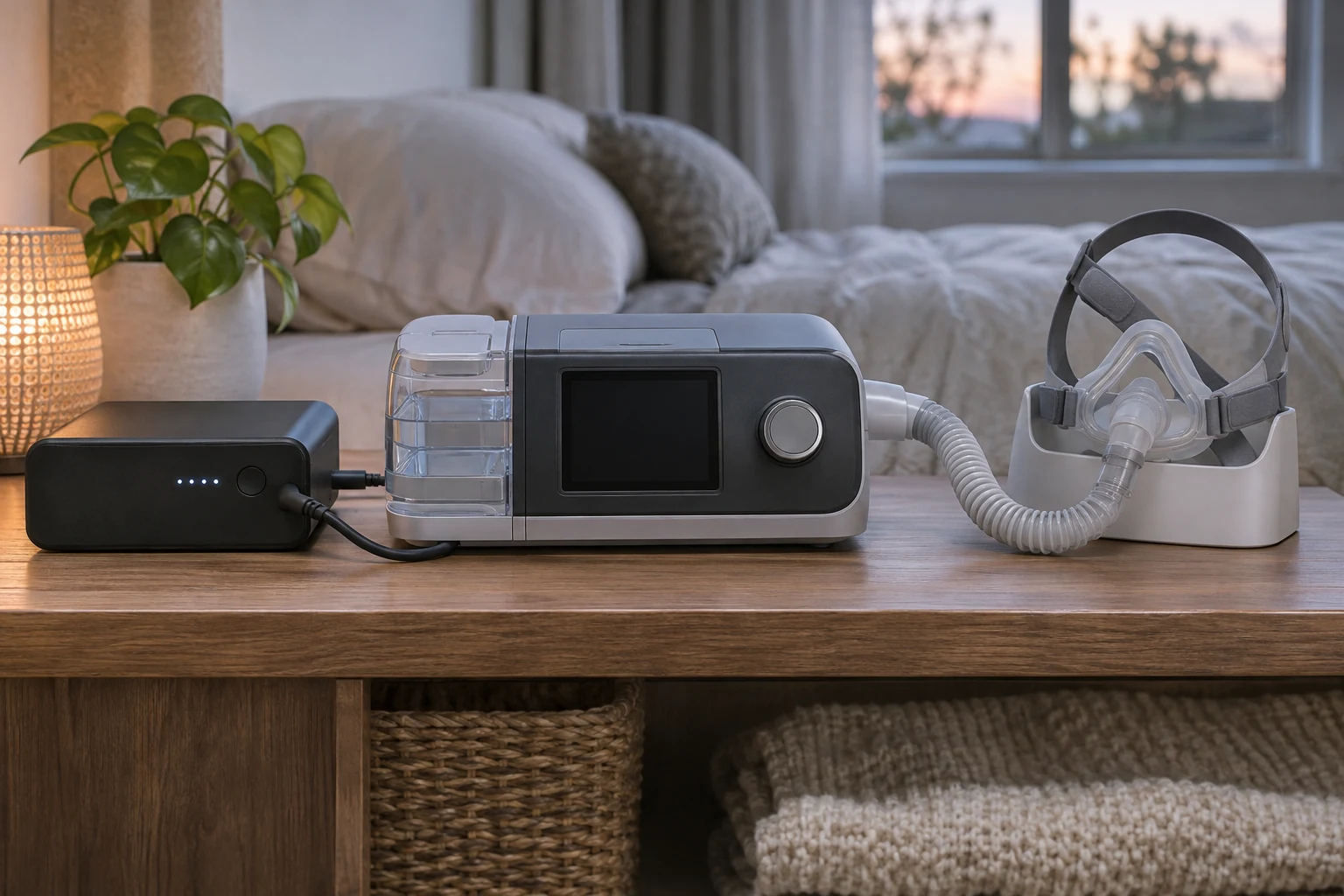
Prepping at a glance
- Confirm compatibility with the device supplier before purchasing.
- Test the approved setup under normal conditions.
- Plan what happens before backup power is exhausted.
Identify the device and the care requirement
CPAP power outage backup planning starts with the exact device model and the clinical importance of uninterrupted treatment for you. Ask your clinician what to do during an interruption and which circumstances require another arrangement. CPAP, ventilation, oxygen equipment, and other powered devices have different requirements; a plan for one cannot automatically be transferred to another.
FDA medical-device emergency guidance highlights how power loss and other emergency conditions can affect equipment. Record the supplier’s contact, model number, prescribed settings, and applicable instructions. Keep this information accessible to a helper, while making clear that settings should not be changed without the appropriate clinical direction.
Confirm power compatibility before shopping
Medical device backup power must match the manufacturer’s approved electrical requirements and accessories. Ask about compatible batteries, adapters, cables, and any restrictions. A plug that fits does not establish compatibility, and a portable power station’s advertised capacity does not tell you the usable runtime of your complete setup.
List the features and accessories normally in use, including any humidification or heated tubing. Ask the care team whether and how operation may differ during an outage. Do not turn features off or modify wiring based on a generic internet estimate. Request a written recommendation that identifies the supported setup and any maintenance, charging, or replacement requirements for its battery.
Test the approved arrangement safely
A CPAP emergency plan should include a supervised or supplier-guided check of the approved backup setup during normal conditions. Confirm that you can connect it, recognize status indicators, and locate instructions. Use the actual configuration recommended for you rather than extrapolating from a different device’s review. Follow guidance for evaluating runtime without putting necessary treatment at risk.
Write the result as a practical planning estimate with its conditions, not a guarantee. Battery age, settings, accessories, and charging state can change performance. Keep a charging and inspection routine, and store cables together so the system is ready. A spare battery in a drawer is not useful if its charger is missing or nobody knows its condition.
Decide what happens before the limit
Choose a destination and transport plan if the outage lasts longer than your approved backup arrangement can support. Confirm that the destination can meet your actual care needs. Utility medical-needs notification programs may be useful where available, but do not treat registration as a promise of uninterrupted power or immediate restoration.
Keep clinician, supplier, emergency, and caregiver contacts available offline. Ask your clinician about symptoms or circumstances that require urgent help. Never run a fuel-burning generator indoors, in a garage, or near building openings to power a device. If backup power fails or necessary treatment cannot be maintained, follow your care plan and seek appropriate assistance promptly rather than improvising a new electrical or medical solution.
