
Prepping at a glance
- Follow the instructions for your exact insulin product.
- Plan monitoring, supplies, and replacement access together.
- Do not change insulin or dosing without clinical guidance.
Start with the exact insulin and packaging
When asking how to keep insulin cool during power outage conditions, start with the product name, packaging, whether it is opened, and its labeled storage instructions. Different products and circumstances can require different handling. Write down the relevant instructions with help from your pharmacist or diabetes care team rather than relying on a remembered rule from another person’s insulin.
FDA emergency insulin guidance discusses storage and switching considerations. It does not mean every household should use the same temperature limit or time allowance without checking the actual product. Ask what to do if your insulin has been outside its recommended conditions and how to obtain a replacement during an interruption.
Plan cooling without freezing
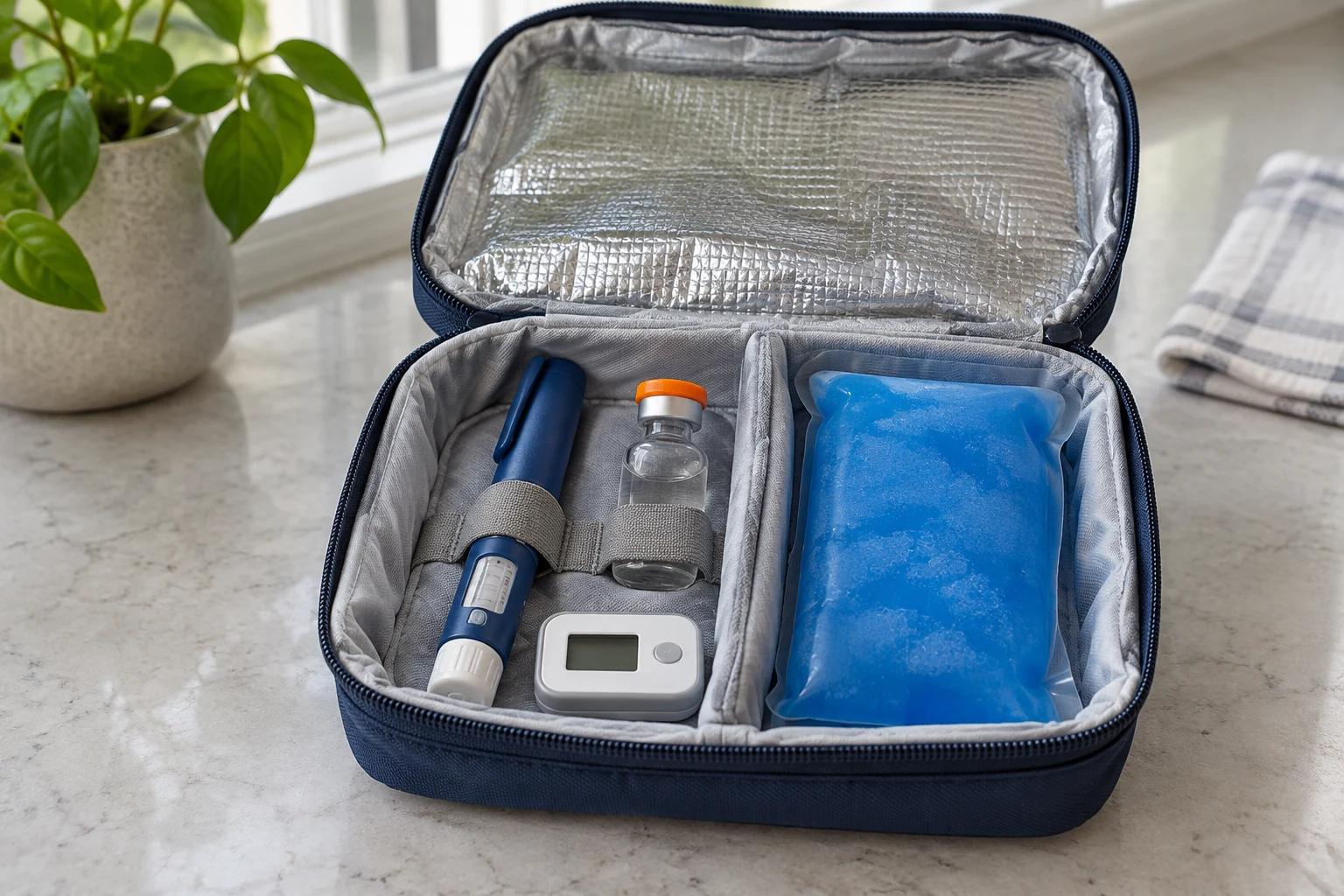
Insulin emergency storage should avoid both excessive heat and accidental freezing. Discuss an appropriate insulated container, temperature monitoring, and the arrangement of cooling materials with your pharmacist. Do not place insulin directly against frozen packs or assume that a cooler’s interior remains uniform. A container can protect from outdoor heat while still creating a very cold spot next to the cooling source.
Practice setting up the storage arrangement during normal conditions without risking your working medicine supply. Check whether it can travel with you and whether you can read the temperature easily. Record where supplies are kept and what a helper should do. A clear diagram or short product-specific note may be more useful than several pages of general advice.
Keep the rest of diabetes care functioning
A diabetes power outage plan also needs monitoring supplies, prescribed administration equipment, food arrangements, and contact information. CDC emergency insulin information emphasizes careful management and obtaining medical attention when needed. Ask your care team about device interruptions and the backup methods appropriate to your treatment.
Do not assume that a backup method is safe merely because supplies are available. Get individualized instructions before an emergency and keep them accessible. Discuss symptoms or readings that require urgent help and how to contact the care team after hours. If you feel seriously unwell or suspect a medical emergency, seek urgent care rather than spending time troubleshooting a storage container alone.
Choose a destination and replacement route
Identify where you could go if safe storage or essential diabetes care cannot be maintained at home. Confirm that the destination can meet your actual needs and that you can reach it with supplies. Keep pharmacy and prescriber information, product details, and relevant insurance records available in a protected portable form.
Never switch insulin products, change doses, or alter a pump plan solely on the basis of a general preparedness article. Follow qualified clinical guidance. After an outage, ask about any uncertain storage exposure instead of assuming a product is acceptable because it looks unchanged. Review what made the plan difficult—temperature visibility, insufficient transport space, or a missing contact—and correct that specific gap before the next disruption.
