
Prepping at a glance
- Choose a room everyone can use comfortably and safely.
- Match filtration to the room and maintain compatible filters.
- Keep a relocation option for smoke, heat, or power failure.
Choose a practical room
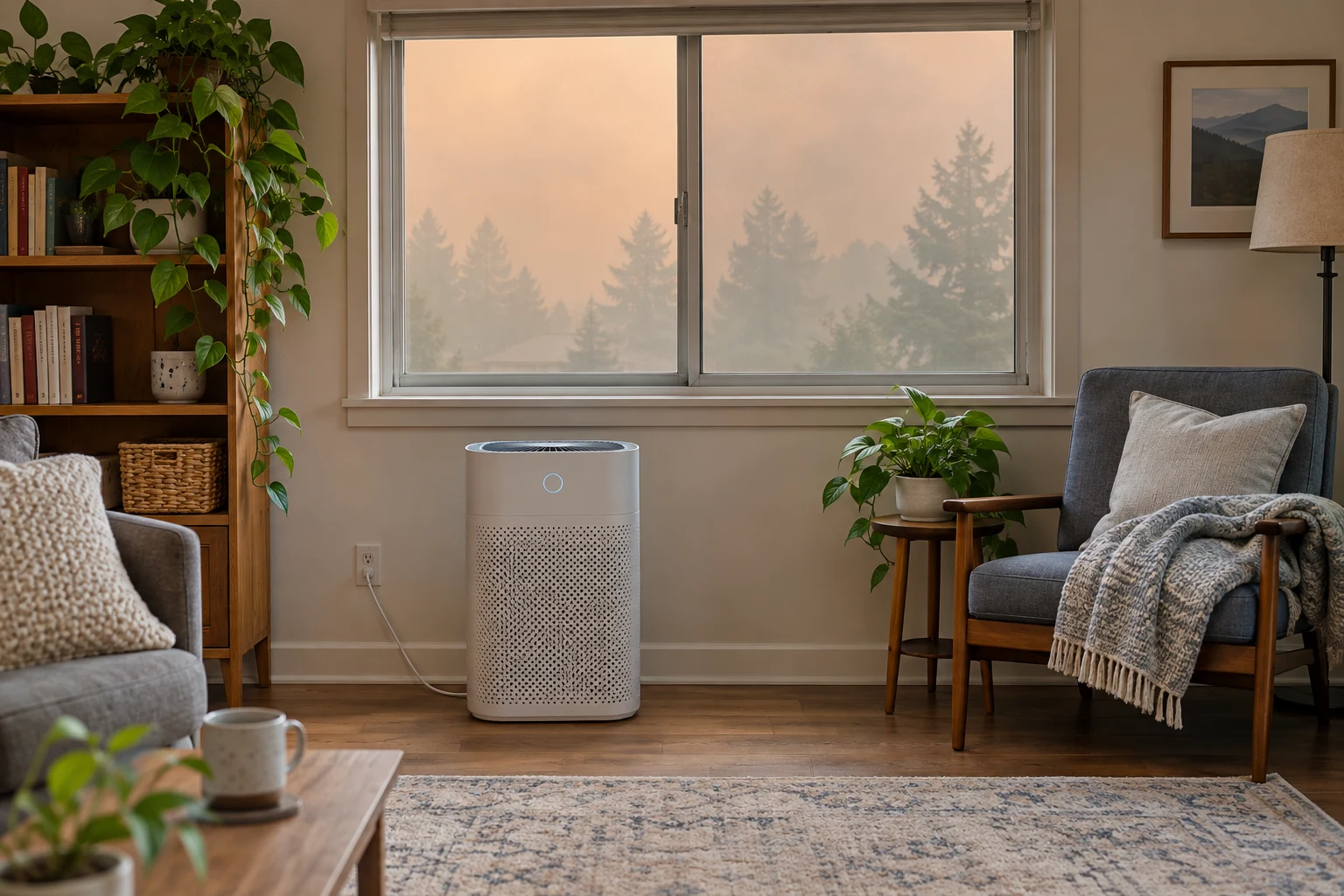
A clean air room wildfire smoke plan should begin with a real space that can accommodate the household. A bedroom or other room that can be separated from the rest of the home may work, but consider seating, sleeping, bathroom access, mobility, and pets. A room nobody can comfortably occupy for long is unlikely to serve its purpose.
EPA guidance on cleaner-air rooms describes closing doors and windows, limiting indoor particle sources, and using appropriate filtration. Keep emergency exits usable. The aim is to reduce smoke exposure, not to create a hermetically sealed chamber or a reason to ignore evacuation instructions. Review the room during normal conditions so needed adjustments are straightforward.
Match filtration to the space
Wildfire smoke air filtration requires equipment suitable for the room and a maintenance plan. EPA recommends a correctly sized portable air cleaner that does not produce ozone. Check manufacturer performance information and replacement-filter availability. If considering a more efficient central HVAC filter, confirm compatibility with the system rather than forcing in a filter that restricts operation.
Write down the room dimensions, filter model, and where replacement supplies are kept. Read the controls before you need them. Noise can affect whether people keep a cleaner running, so test the arrangement while everyone is present. Place cords and equipment where they do not block movement. Do not assume a device is effective because its advertising uses the word purification.
Keep indoor activities and heat in the plan
A cleaner air room plan should avoid adding unnecessary smoke or particles inside. Move activities such as frying food or burning candles out of the plan, and use lower-emission alternatives for lighting and meals. Keep needed supplies nearby so the household does not repeatedly open doors simply to retrieve a charger or a book.
Review cooling and ventilation settings with the equipment instructions or an appropriate technician. Smoke and heat can create competing concerns; closing windows is not a sufficient answer if the room becomes dangerously hot. Ask clinicians about individual heart or lung conditions and retain any prescribed action plan. Seek medical help for serious symptoms rather than assuming the room setup makes worsening symptoms harmless.
Test the room and identify another place to go
Spend a normal evening in the chosen space with the equipment running. Check whether everyone can rest, communicate, access needed care items, and move safely. This rehearsal exposes practical problems such as insufficient outlets, uncomfortable seating, or an inaccessible bathroom. Make a short correction list and review it before fire season.
Identify a cleaner-air destination if filtration, cooling, or power cannot be maintained. Confirm transport, access hours, pets, and medical needs rather than relying on an unverified address. Monitor official air-quality and evacuation information during an event. The room is a useful exposure-reduction option only while staying home remains appropriate; it should sit alongside a departure plan, not replace one.
