
Prepping at a glance
- Choose light for the task rather than maximum brightness.
- Test controls with the user’s actual abilities.
- Keep batteries and charging arrangements simple.
Choose the job before the beam
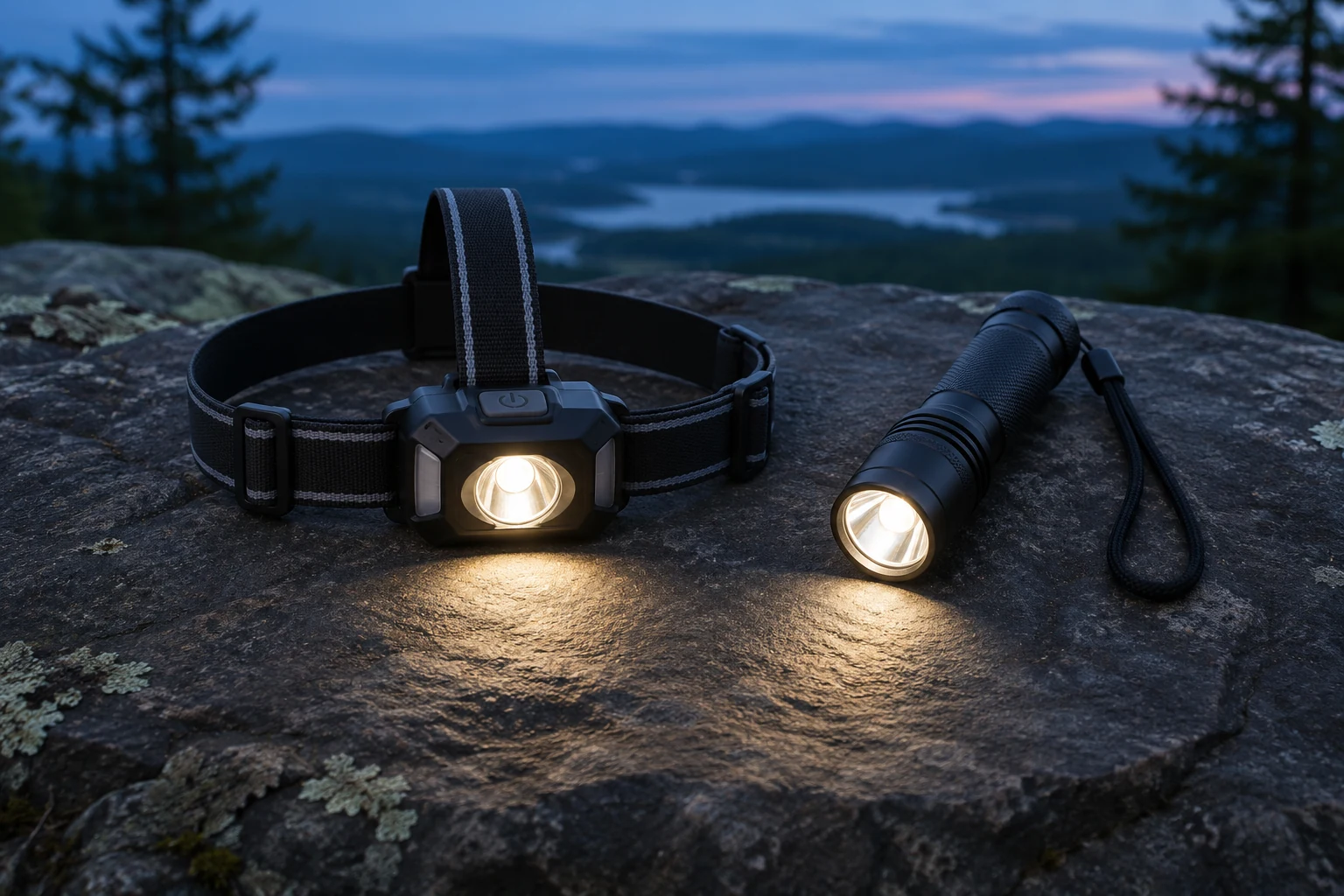
A headlamp vs flashlight emergency kit comparison begins with what your hands will be doing. Carrying supplies, opening a door or caring for a child may make a hands free emergency light convenient. Looking under furniture or directing light away from someone's face may be easier with a handheld flashlight. Neither format wins every task.
List three likely outage activities and try both types if you already own them. Do not buy an expensive model simply because the maximum brightness is impressive. Department of Energy: home emergency preparedness guide supports battery-operated lighting for outages. Your comparison should concentrate on usable light, runtime and control rather than turning every dark room into a spotlight demonstration.
Inspect the everyday controls
Useful emergency flashlight features include a setting you can select quickly, a clear battery arrangement and a shape you can hold securely. Test whether the switch is easy with gloves or reduced hand strength. Some lights cycle through flashing modes before returning to a comfortable level; decide whether that behavior helps or annoys you.
For a headlamp, adjust the strap while wearing the glasses or hat you normally use. Look down at a map, reach for an object and walk through an ordinary room. Check that the housing stays in position. Aim it below other people's eyes during conversation. Comfort matters because a light you remove after five minutes does not solve a long task.
Compare power and realistic runtime
Read runtime information for the setting you actually plan to use, not just the longest number on the package. A very low mode may be suitable for finding a bedside item but insufficient for detailed work. Rechargeable and replaceable-battery models each need a replenishment plan; standardizing some battery types may reduce confusion.
Keep spare cells protected from loose metal objects and follow the device's battery instructions. Do not mix random cells to use up leftovers. For rechargeable lights, store the correct cable and verify charging from your planned power source. A light with a proprietary connector can still be useful, but losing that cable becomes a more consequential failure.
Create a small lighting system
Place a simple light near each occupied sleeping area so the first task is not searching for the emergency box in the dark. Keep a task light with the household supply station and a portable option for departure. If the budget supports only one purchase, choose the format that resolves the most important unmet task.
Run a brief dim-room practice without creating trip hazards or turning off critical equipment. Retrieve the light, select a comfortable setting and find the replacement power source. Note any glare, awkward switch or missing cable. Revisit the choice after ordinary use. A small set of familiar lights, maintained and reachable, is more useful than a drawer full of unfamiliar high-output equipment.
