
Prepping at a glance
- Separate navigation, room and task lighting.
- Plan runtime at the settings you will use.
- Place the first light where it can be reached immediately.
Give each light a purpose
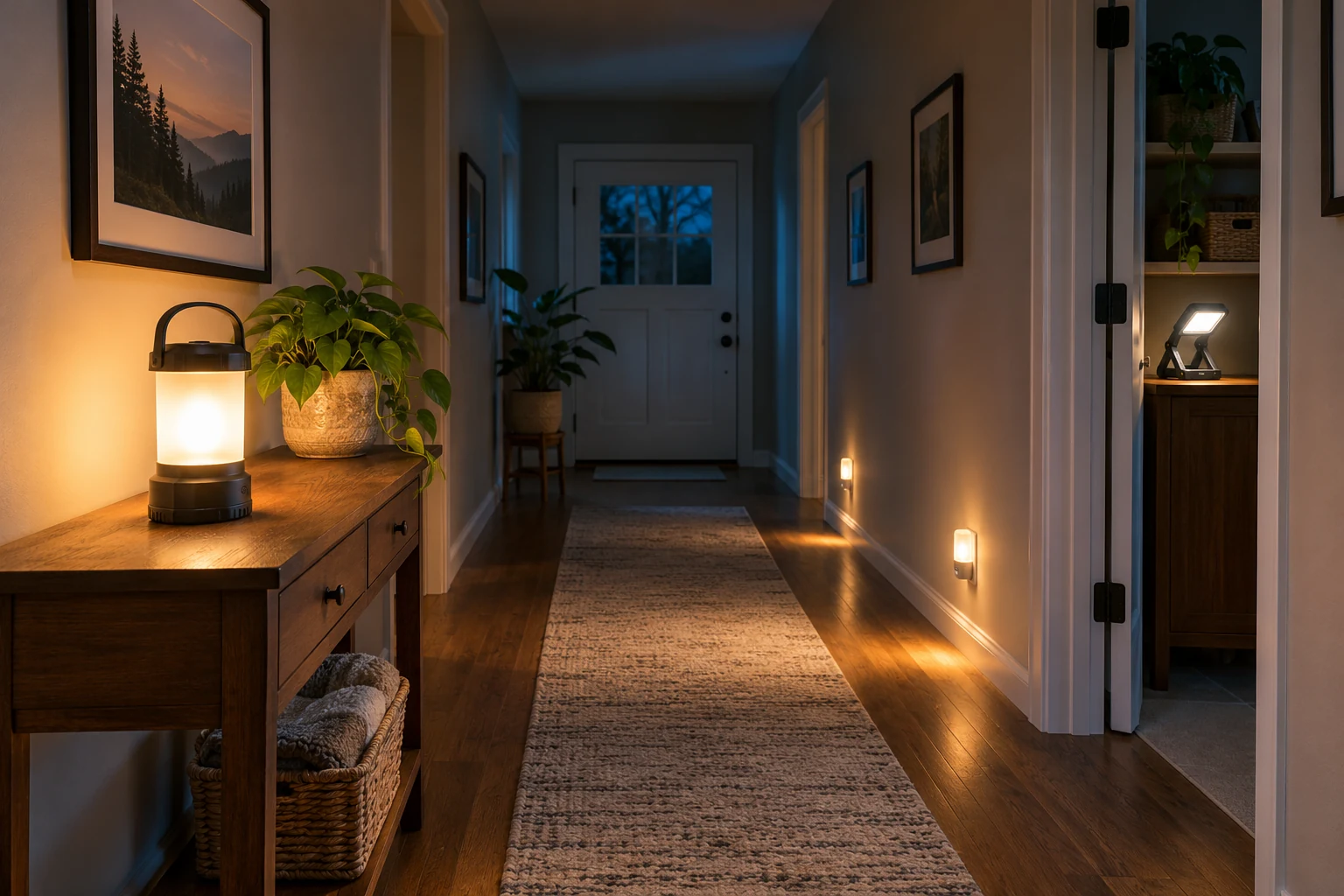
Emergency lighting for power outages works better as a small system than a single very bright lantern. Start with three jobs: moving safely, lighting a shared room and doing close work. A low-output light may be enough for orientation, while reading instructions or preparing a meal needs a different arrangement.
Draw a simple blackout lighting plan on a room sketch. Mark sleeping areas, stairs, bathrooms and the place where the household will gather. Keep an immediately reachable light beside beds or in another agreed location. Department of Energy: home emergency preparedness guide recommends battery-operated lights for outages. Avoid making open flames the default when a battery option can perform the same task.
Check placement before buying more
Put a lantern on a stable surface where it illuminates the task without shining directly into people's eyes. Try a headlamp for jobs requiring both hands and a small flashlight for moving between rooms. Keep exits clear, and avoid cords or equipment placed across walking paths. Consider children, pets and anyone with reduced vision or mobility.
A bright central lantern may leave a bathroom dark or create deep shadows near stairs. Walk the route in ordinary low light with someone available to help, then correct those specific gaps. Do not deliberately create a dangerous dark-house exercise. Sometimes moving an existing light solves the problem without adding another battery-powered device.
Build a battery schedule
Battery lantern runtime depends on the selected mode and operating conditions. Record the manufacturer runtime for the mode you intend to use, then conduct a normal-condition check when practical. Treat that result as information about your setup, not a guaranteed duration under every temperature or battery age.
Estimate hours per evening for each light. A shared-room lantern might operate during dinner, while personal lights are used briefly. Identify which devices share battery sizes and which require separate chargers. Label rechargeable cables so they do not disappear into everyday use. Keep replacements according to manufacturer guidance, and add a review date rather than assuming unopened batteries remain ready indefinitely.
Balance light with other power needs
If lights share a power bank or station with phones and radios, include them in the same energy budget. Brightness should serve a task, then be reduced or switched off when no longer needed. Assign a convenient place for each light so everyone returns it instead of leaving the only portable lamp in an unexpected room.
After a brief practice evening, ask who struggled to see and which light was hardest to use. Adjust controls, placement or instructions before making purchases. Check the system after a household member's needs change or a device is replaced. A useful lighting plan feels ordinary: people can find the bathroom, read necessary information and settle down while preserving enough reserve for the next night.
