
Prepping at a glance
- Identify likely contaminants before comparing products.
- Read verified reduction claims and instructions.
- Keep an alternative source for unsuitable water.
Name the water risk first
The best emergency water filter cannot be selected without knowing what is in the water. A product designed to improve taste may have little relevance to disease-causing organisms or a chemical spill. Start by identifying the likely source: stored potable water, a public-system advisory, a backcountry stream or flood-affected water.
CDC: choosing home water filters explains why different filters address different contaminants. Read performance claims for the specific model and replacement element, not just the brand. A broad phrase such as clean water does not tell you which bacteria, viruses, parasites or chemicals are addressed. If the source is uncertain, that uncertainty belongs in your plan rather than being hidden by reassuring packaging.
Compare the complete treatment process
Portable water filter limitations include the organisms and substances the device is not designed to remove. Follow the manufacturer's instructions for any required additional treatment. CDC: emergency water treatment warns that water contaminated by fuel or toxic chemicals cannot be made safe through ordinary boiling or disinfection; use an alternative source and official guidance.
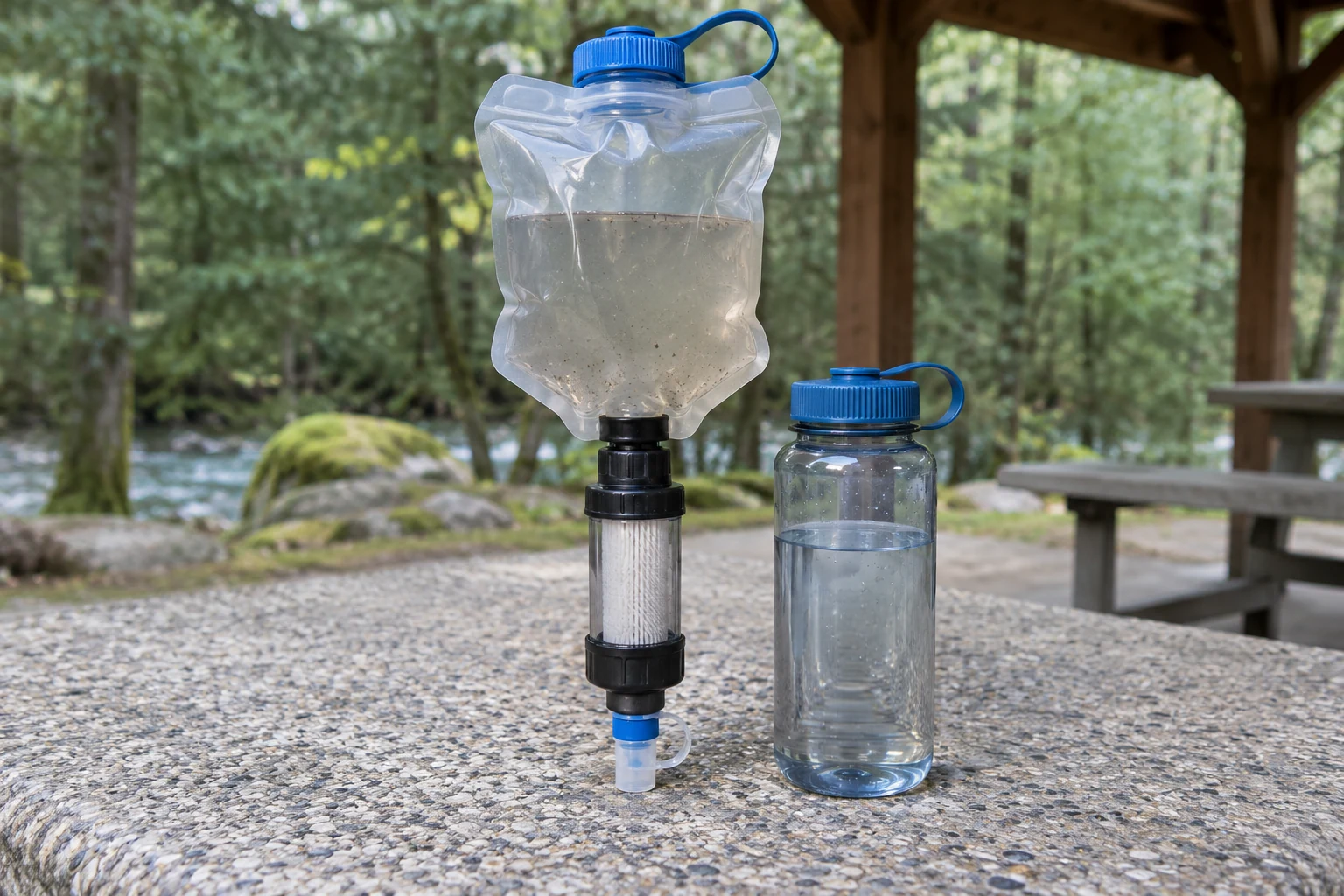
Evaluate capacity, flow method and the effort required. A squeeze device for one walker and a gravity system serving a household have different workloads. Consider who must operate it, how clean water is collected and whether dirty and clean components can remain separate. A fast flow rating matters little if the process is difficult for the intended user.
Read the maintenance requirements
Check replacement intervals, cleaning procedures, storage limits and whether freezing or physical damage can compromise the model. Keep the correct spare parts and instructions. Do not assume a device is still effective merely because water passes through it. Some failures may not be obvious through taste or appearance.
Build an emergency water treatment plan that includes the container, pre-treatment steps if specified, contact time where applicable and clean storage afterward. Practice with water appropriate to the product and manufacturer directions during normal conditions. Mark which containers are reserved for untreated water. Keep instructions readable when wet and avoid transferring assumptions from a different filter you previously owned.
Maintain a fallback and a decision rule
For a municipal advisory, follow the issuing authority's current instructions rather than treating your filter as an automatic exemption. For outdoor travel, confirm water availability and carry enough to reach a safe alternative if a source is dry or unsuitable. A treatment device cannot produce water where none is available.
Write a stop rule for the household: if the suspected contamination is outside the product's documented capability, obtain safer water rather than experimenting. Compare purchase price with replacement elements and practical capacity, then choose the simplest system that meets the defined need. Keep a reserve of known-safe drinking water when feasible. The strongest plan combines suitable treatment, clean handling and an honest boundary around what the equipment cannot accomplish.
