
Prepping at a glance
- Separate weather protection from insulation.
- Include an appropriate ground layer.
- Practice in mild conditions with an easy retreat indoors.
Understand what each item contributes
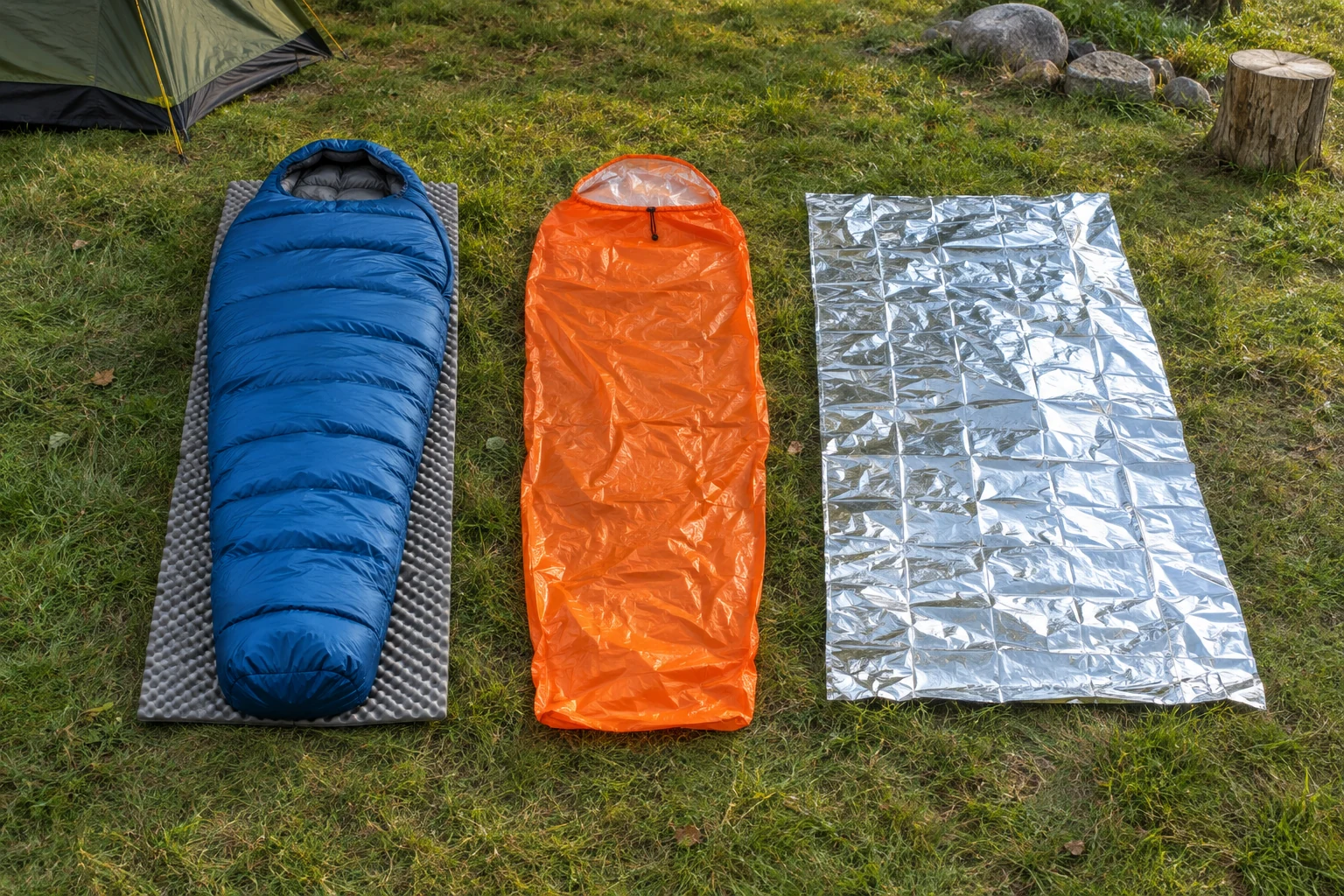
The emergency blanket vs bivy choice begins with shape and intended use. A blanket can be wrapped or positioned in different ways, while a bivy surrounds much of the body. An insulated sleeping bag provides a different function from a thin emergency covering. Read the actual model's construction and instructions rather than treating every shiny material as equivalent.
An emergency sleeping system may need several components: dry clothing, insulation, protection from weather and a layer beneath you. A tiny package is attractive in a day bag, but convenience does not establish adequate overnight protection for your conditions. Plan the likely environment first, then identify what each component contributes.
Look beyond a temperature number
Sleeping-bag ratings are comparison tools with assumptions, not personal guarantees. REI: choosing a backpacking sleeping bag discusses the interaction between a bag, pad and expected conditions. Sleeping pad insulation matters because the ground-facing part of the system has a different job from the covering above you. A reflective sheet is not automatically a substitute for a suitable insulated pad.
Think about where you would actually sleep: a friend's floor, a shelter cot, a vehicle or an outdoor campsite. The appropriate equipment can differ greatly. If your evacuation plan leads to an indoor destination, a bulky wilderness setup may consume space better used for personal essentials. If outdoor exposure is realistic, obtain suitable instruction and equipment instead of relying on packaging language.
Check ventilation, moisture and fit
Bivvy materials differ in breathability and design; SOL: emergency and survival bivvy features shows why model-specific claims must be read carefully. Follow ventilation instructions and keep your airway clear. Do not seal a covering around your face. Moisture management is part of the plan, especially when wet clothing or condensation could affect the insulation you rely on.
Try the item with the clothing and sleeping bag intended for use. Can you enter and exit without assistance? Does it restrict movement or compress insulation? Can the user manage closures with cold hands or limited dexterity? For children and people needing assistance, seek suitable products and supervision rather than assuming an adult emergency covering fits every situation.
Practice without testing your limits
Unpack the system at home and inspect seams, tears and instructions. Conduct a short mild-weather practice near an immediate warm indoor retreat, with another person aware of the plan. This is an equipment-familiarity exercise, not a test of cold tolerance. Stop if you are uncomfortable or conditions worsen.
Record missing pieces, awkward closures and how easily the system repacks. Dry equipment according to its instructions before storage and check it after use. Choose a fallback destination if the conditions exceed the planned system. The useful result is knowing when the equipment is appropriate and when to seek better shelter, rather than treating any emergency blanket as protection against every possible night outdoors.
