
Prepping at a glance
- Choose tools for defined and permitted tasks.
- Use full-size tools where leverage and grip matter.
- Keep utility and electrical work within qualified limits.
List the jobs you expect to do
The best multitool for emergency kit use depends on the tasks you can reasonably perform. Opening packaging, tightening a loose ordinary screw and trimming cord are different jobs from repairing a damaged electrical system. Write down several small tasks from your household routine and match each to a tool you understand.
An emergency tool kit should not encourage work beyond your training. Gas, mains electricity, structural damage and complicated machinery require appropriate professionals or utility guidance. A tool's presence in a kit does not make an unfamiliar repair safe. Start with simple functions that reduce inconvenience while preserving clear boundaries around hazardous systems.
Compare compactness with usability
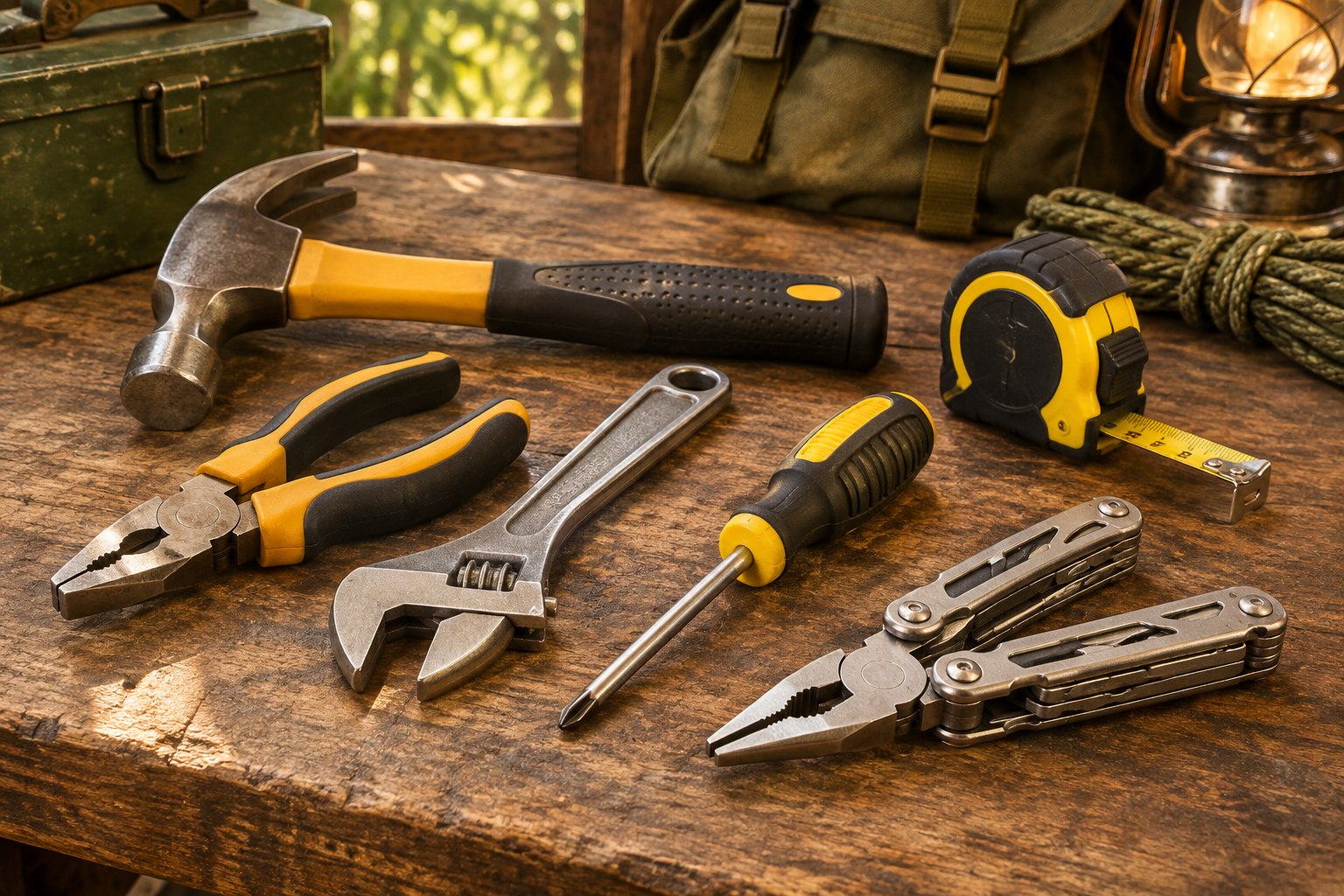
A multitool combines functions in one package and can suit a small travel bag. A few separate tools may offer better grip, reach or control at home. Test how the tools open, lock and close, keeping fingers clear and following the manufacturer's instructions. Consider hand strength and vision as carefully as weight.
Make a multitool buying checklist with the specific functions you need, acceptable size, carry restrictions and replacement support. Avoid paying for attachments that have no defined use. If the screwdriver does not fit your common fasteners or the handle hurts during a basic task, the high feature count does not solve that problem. Check workplace and travel rules before carrying any blade.
Build separate home and travel layers
At home, organize basic tools where another adult can find them. Keep appropriate work gloves and eye protection with tasks that require them, and retain manuals for household equipment. For a departure bag, choose a smaller selection justified by the route and destination. Heavy tools that duplicate equipment at a planned destination may be unnecessary.
Ready.gov emergency supply checklist includes tools among broader preparedness supplies, but household needs should determine the details. Label the tool pouch and keep consumables such as compatible tape or spare ordinary fasteners with their intended use. Do not store unprotected sharp edges beside food packages, water containers or batteries. Secure heavier equipment during transport.
Practice and maintain the useful parts
Choose one harmless practice task, such as tightening a loose cabinet handle with the correct screwdriver or cutting scrap cord on a suitable surface. Check that the tool performs as expected without excessive force. If the job requires improvising a dangerous substitute, stop and obtain the correct tool or help.
After use, clean and maintain equipment according to its instructions. Inspect for corrosion, loose parts or damaged edges before returning it to the kit. Keep an inventory of what has been borrowed so the household set remains complete. A compact, familiar selection maintained in working order is more useful than an oversized kit whose tools nobody has handled before the lights go out.
