
Prepping at a glance
- Ask for test evidence matching the claimed threat.
- Do not treat a blocked phone call as an EMP qualification.
- Keep paper and non-electronic backups regardless of shielding.
Separate the product label from the evidence
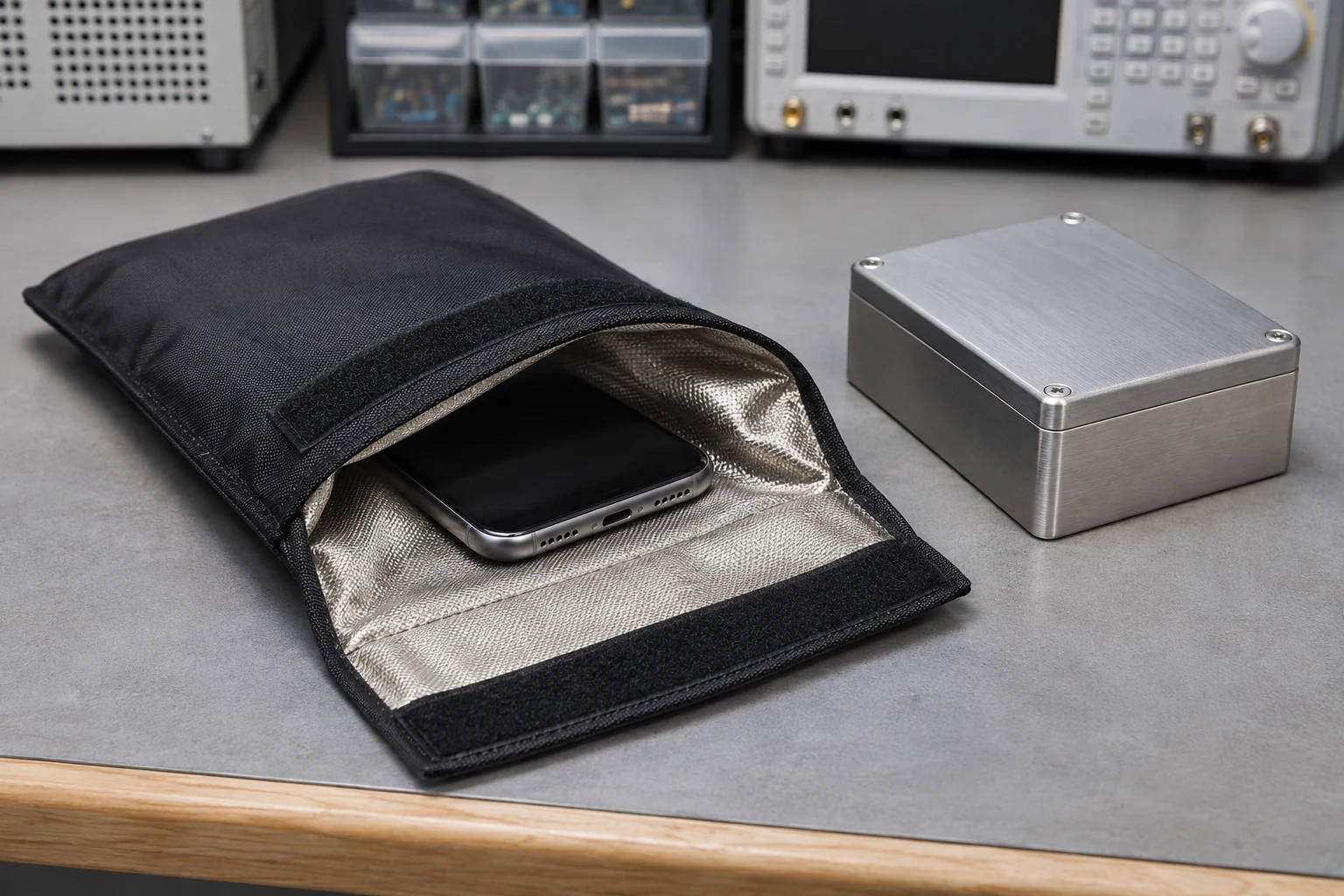
A faraday bag for EMP protection is only as useful as its documented performance for the conditions claimed. The term Faraday describes a shielding concept, not a universal quality certification. Consumer products may be marketed for privacy, radio-frequency isolation or broader electromagnetic threats, and those claims are not interchangeable.
CISA EMP protection and resilience guidelines describes layered protection and resilience for facilities and equipment. Its technical approach is a reminder that meaningful EMP shielding claims involve configuration and performance, not merely a metallic-looking pouch. Household readers should avoid assuming that a consumer accessory provides the same assurance as an engineered and tested system.
Ask what was actually tested
Request a report identifying the exact model, test method, frequencies, measured attenuation and closure arrangement. Ask whether the testing included seams, repeated opening, cables or other features present in normal use. If the seller provides only an unexplained percentage or an untraceable claim, note that evidence gap before spending money.
Faraday bag testing with a phone can reveal whether some signals are reduced under that particular arrangement. It does not establish protection against every electromagnetic pulse characteristic or frequency. A phone's failure to connect is also affected by network conditions. Treat such checks as limited observations, not proof of a product's broad protective performance.
Consider how protection is lost in use
A container may be used differently from the tested configuration. Closures can be incomplete, fabric can wear and cables can introduce paths that change the system. The practical question is whether the user can maintain the specified arrangement over time. Read inspection and storage instructions and ask the manufacturer what damage requires replacement.
Decide what would be placed inside and why. A spare device with no charger, readable instructions or needed offline information may offer little continuity even if it remains functional. Conversely, equipment used every day cannot remain sealed indefinitely. Write down the tradeoff between accessibility and storage, and avoid claiming a setup is protected while ignoring how it is actually operated.
Keep preparedness broader than shielding
Prioritize ordinary resilience needs such as water, food, communication plans, lighting and safe backup power before purchasing specialized shielding. Store contact information, routes and key instructions on paper where appropriate. These backups help during many disruptions without relying on a prediction about electromagnetic events.
If a device supports a critical function, involve its manufacturer or a qualified specialist rather than experimenting with an unverified container. Keep a record of the evidence available for any purchase and the questions that remain unresolved. Do not promise family members that one bag makes a system invulnerable. A defensible household plan identifies dependencies, preserves alternative ways to function and treats specialized protection as a limited measure supported by specific evidence.
