
Prepping at a glance
- Practice on scrap material before important gear.
- Match repair products to the fabric and coating.
- Keep life-safety and structural repairs out of improvised practice.
Start with harmless practice material
Emergency gear repair skills are useful for small clothing tears, loose ordinary straps and damaged noncritical fabric. Begin with scrap material or an item you can afford to replace. Identify the fabric and any coating before choosing adhesive, thread or a patch. A repair that works on one material may damage another or fail to bond.
Set clear limits. Climbing equipment, vehicle restraints, load-bearing safety straps, damaged batteries and other critical systems need manufacturer-approved service or replacement. Do not use a general sewing or patching exercise to justify keeping unsafe equipment in service. The first skill is deciding whether the repair is appropriate.
Practice a compatible fabric patch
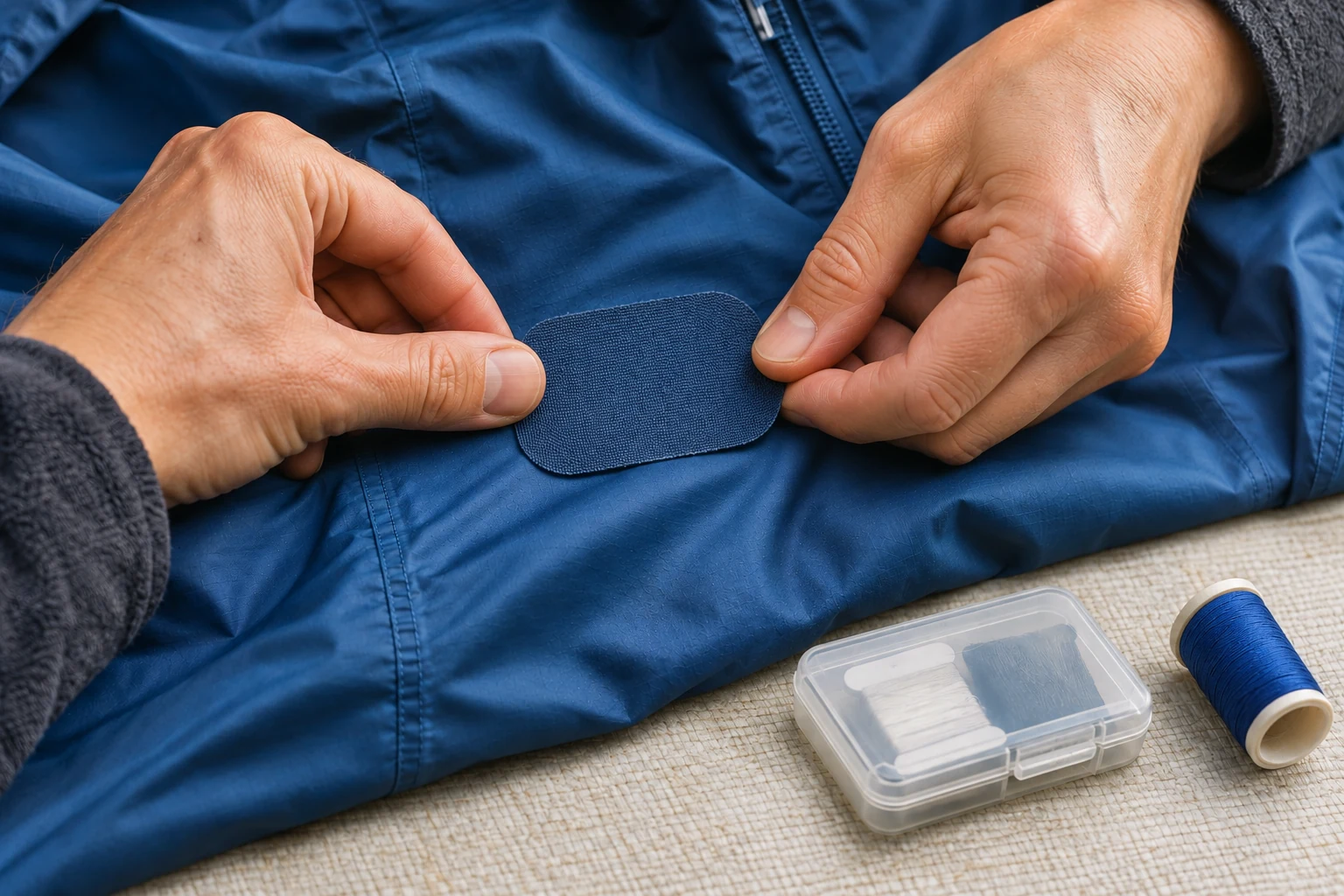
For fabric patch practice, read the repair-product instructions and gear care label together. GEAR AID: tent hole repairs illustrates how methods differ for tent fabric and mesh. Clean and dry the area using compatible methods, then apply the recommended patch size, shape and pressure. Follow any curing or waiting time before use.
Use a sample tear to learn handling without rushing. Check whether the patch edges lift when the material flexes gently. Do not assume a temporary field repair restores the original waterproof rating or strength. Mark the item for further inspection at home. Keep adhesive products within their storage limits so a tube in the kit does not become an unusable hardened lump.
Learn a small seam and strap task
With suitable needle and thread, practice closing a small tear in ordinary scrap fabric under instruction or with a reliable sewing reference. Keep stitches clear of your fingers and secure sharp tools during storage. Inspect the result from both sides and gently test it for the intended noncritical use.
For an ordinary adjustable pack strap, first determine whether the buckle is threaded correctly according to the manufacturer. A loose strap may need correct adjustment rather than stitching. Replace damaged compatible hardware through an approved method where available. Do not hide a broken load-bearing attachment under tape and assume the pack is restored; reduce the load and seek an appropriate repair or replacement.
Build a kit around repairs you know
A field repair kit can be small: compatible patches, a limited amount of suitable cord or tape, a protected sewing needle, thread and relevant instructions. Select supplies for the gear you actually carry. A large assortment of unfamiliar adhesives adds weight without guaranteeing a usable repair.
Practice before the trip, then store a note describing compatible materials and any cure time. After using a temporary fix, inspect the item fully in good conditions and arrange permanent service when needed. Replenish consumed supplies and check shelf-life or storage guidance. The goal is extending the usefulness of ordinary gear without confusing a convenient temporary fix with verified structural performance. Knowing when to stop using an item is part of competent repair.
