
Prepping at a glance
- Separate urgent-use records from long-term archives.
- Keep protected backups away from the same physical location.
- Review access and updates when household circumstances change.
Organize by the job a document must do
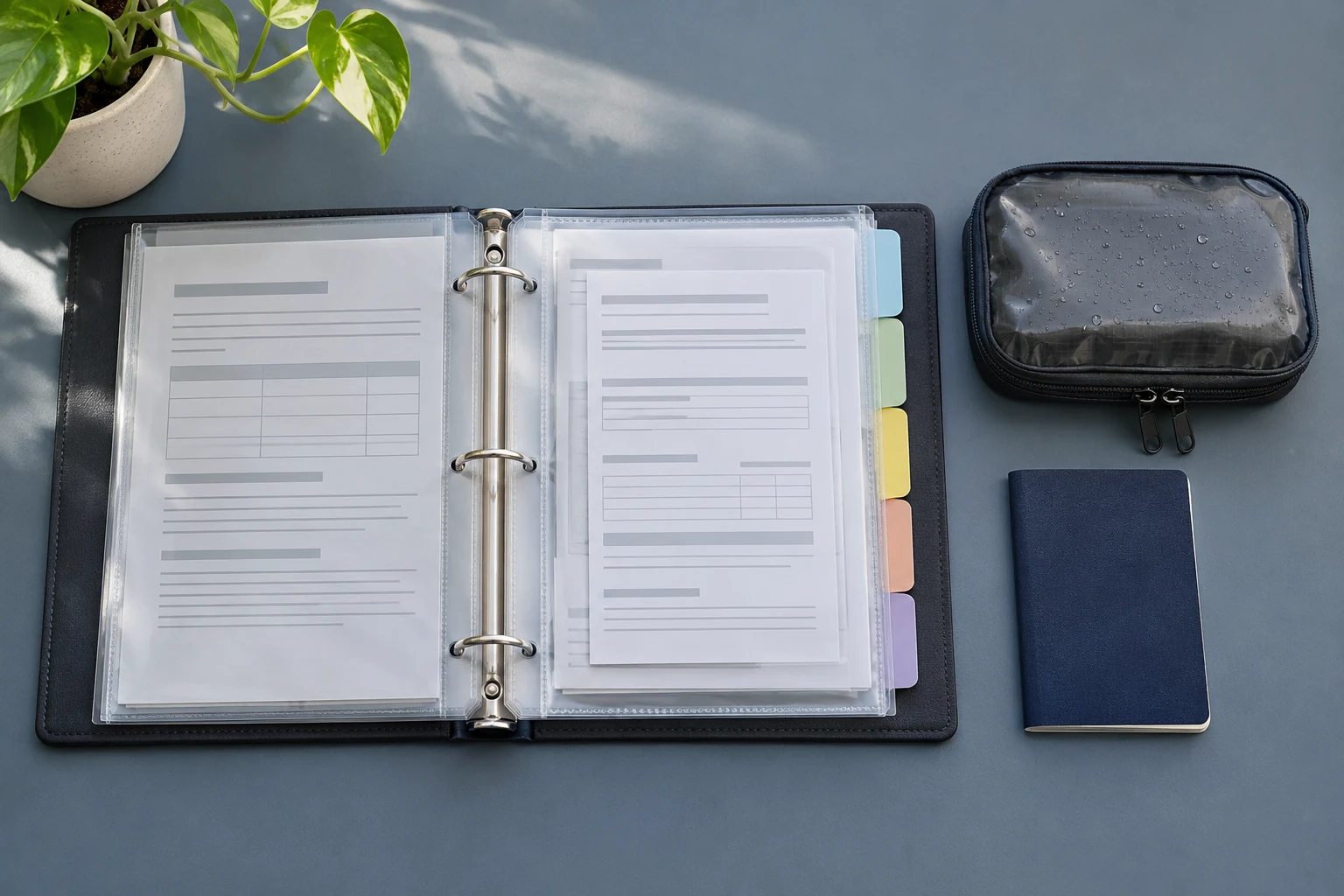
An emergency documents binder checklist should begin with purposes: proving identity, obtaining care, contacting insurers, managing essential accounts, and reconnecting family members. That approach creates a usable tool rather than a large stack of paper. Put an index at the front and group records under labels another adult could understand.
FEMA’s Emergency Financial First Aid Kit offers a structured starting point for household records. Adapt it to your circumstances instead of copying every possible category. A renter, homeowner, caregiver, and frequent traveler may need different records. Include verified contact information so a document leads to an action rather than simply adding weight to the binder.
Separate immediate needs from the archive
A disaster document checklist can have a small portable section and a more complete secure archive. The portable section might include essential contacts, identification copies where appropriate, concise medical information, insurance references, and necessary care instructions. The archive can hold records that matter for later recovery but are not needed during a hurried departure.
Do not carry original documents unnecessarily if suitable copies meet the purpose, and check requirements for situations where an original is essential. Keep sensitive numbers limited to what is actually useful. A binder should not become an easily stolen master key to every account. Decide which information needs additional protection and how a trusted person can access it when genuinely needed.
Protect copies from the same failure
Secure emergency records require both physical protection and thoughtful backup. A binder and its only digital copy stored beside it can be lost in the same event. Consider a protected backup in a separate appropriate location, with access controls suited to the sensitivity of the information. Test that you can retrieve it without relying on a single damaged or unavailable device.
Avoid emailing complete document collections to yourself without considering account security and exposure. Use strong credentials and appropriate authentication for any digital service. Keep recovery arrangements understandable to the person who may need them. If the backup depends entirely on an explanation only you can give, it may fail precisely when someone else must manage household tasks.
Maintain the binder with a short routine
Review the records after changes in address, insurance, prescriptions, household members, or caregiving arrangements. Replace outdated pages and dispose of sensitive old copies securely. Put a review date on the index so a helper can judge whether the information is current. Keep the routine manageable by updating affected sections instead of rebuilding the entire system.
Run a practical test: ask a trusted adult to locate the insurer’s contact, an emergency care summary, and the family contact list. Notice which labels caused confusion. Improve those labels before adding more paperwork. The finished binder should reduce searching and repeated explanations during a disruption while protecting personal information from unnecessary disclosure. Its value is accessibility with appropriate limits, not the sheer number of documents collected.
