
Prepping at a glance
- Keep dental contacts with practical supplies.
- Do not attempt extractions or improvised repairs.
- Breathing or swallowing difficulty needs emergency help.
Define what the kit is for
An emergency dental kit can support basic hygiene, communication, and short-term handling while you obtain care. It cannot diagnose an infection, repair every damaged tooth, or make an extraction safe at home. Start with a plan to contact a dentist rather than assuming specialized tools will let you manage serious problems independently.
Dental emergency preparedness includes current dental contact information, after-hours instructions, and a transport option. Ask the practice how emergencies are handled and what information it needs. Keep relevant allergies and medication information available securely so you can communicate clearly when you are uncomfortable or stressed.
Choose modest, understandable supplies
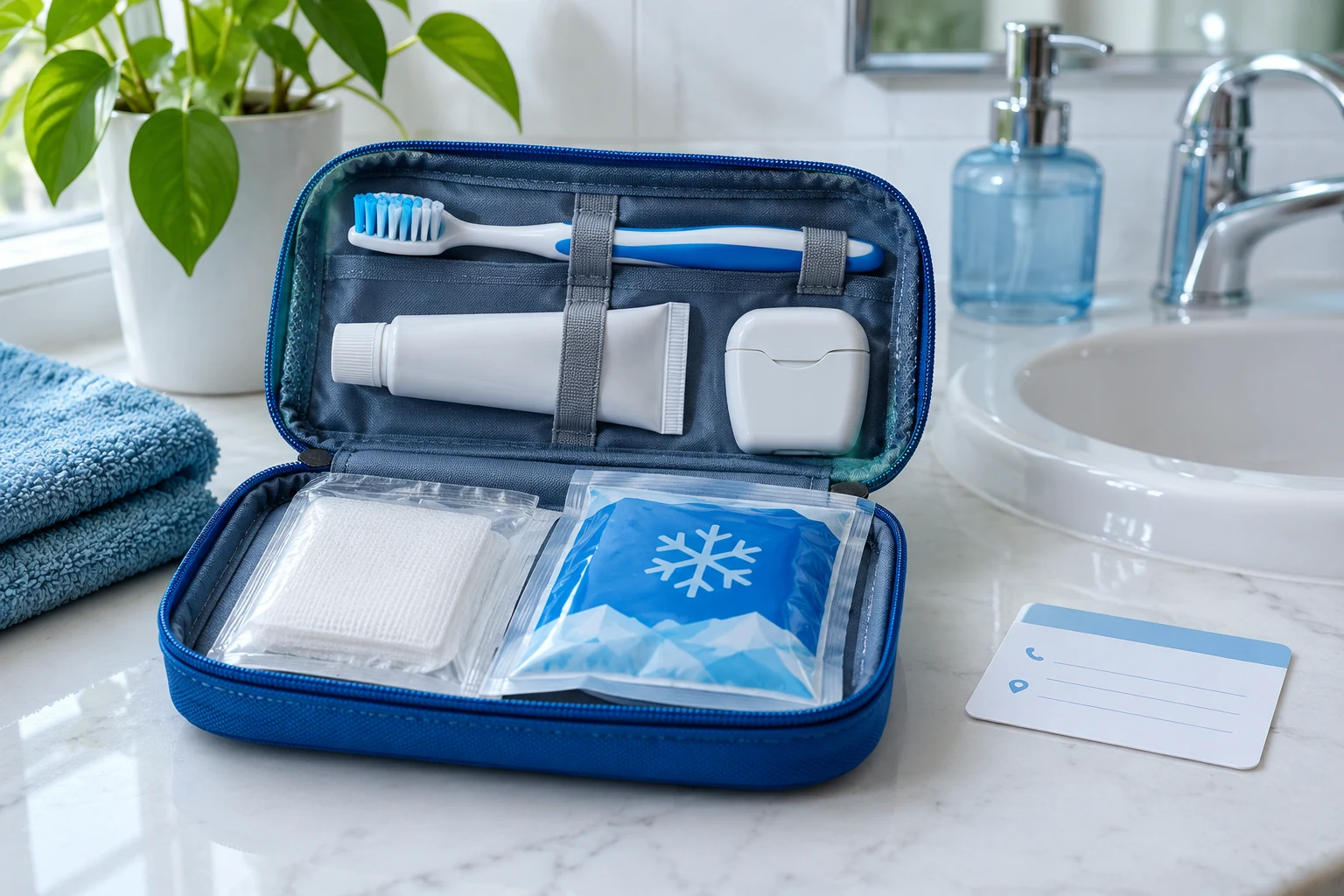
Organize a toothbrush, suitable toothpaste, floss, clean gauze, disposable gloves, and a cold pack that can be used according to its instructions. Include a small light for visibility and written contact information. These are practical organizing suggestions; ask your dentist what additional items fit your household's actual needs.
Keep packaging and directions with any product. If you are considering temporary filling material, dental wax, or a tooth-preservation product, ask when it is appropriate and when it should not be used. Avoid assembling a bag of unfamiliar products that encourages delaying professional assessment. Check expiration and storage requirements during ordinary kit reviews.
Know a few safe limits
The American Dental Association's emergency guidance advises against placing aspirin directly on a painful tooth or gum and against using sharp instruments to remove trapped objects. Do not attempt to drain an abscess, extract a tooth, or glue a broken restoration using household materials.
Contact a dentist promptly for a knocked-out permanent tooth or other significant injury. The ADA provides immediate tooth-handling guidance; read it in advance and ask how the response differs for children. A temporary reduction in pain does not establish that the underlying problem has been resolved.
Recognize when care cannot wait
Urgent dental care is needed for suspected abscesses and significant dental injury. Difficulty breathing or swallowing, major mouth swelling, or other severe symptoms may require immediate emergency medical care. NHS dental abscess guidance identifies these serious warning signs. Use your local emergency number when there is an immediate medical danger.
Do not wait for a scheduled routine appointment while severe symptoms are developing. Tell the clinician what happened, when it began, and any changes in swelling, fever, breathing, or swallowing. Avoid taking someone else's medicine or leftover antibiotics as a substitute for evaluation.
Practice access rather than procedures
Check that another household member can find the dental number and identify the after-hours route to care. Consider how transport, childcare, or accessibility needs would be handled if the problem occurred at night. Those arrangements may be more useful than another specialty item in the box.
Keep routine dental care and prevention in the preparedness plan. Replace worn hygiene supplies and review the kit after treatment changes or a new dental appliance. The goal is to make appropriate care easier to reach and avoid harmful improvisation while waiting for professional help.
