
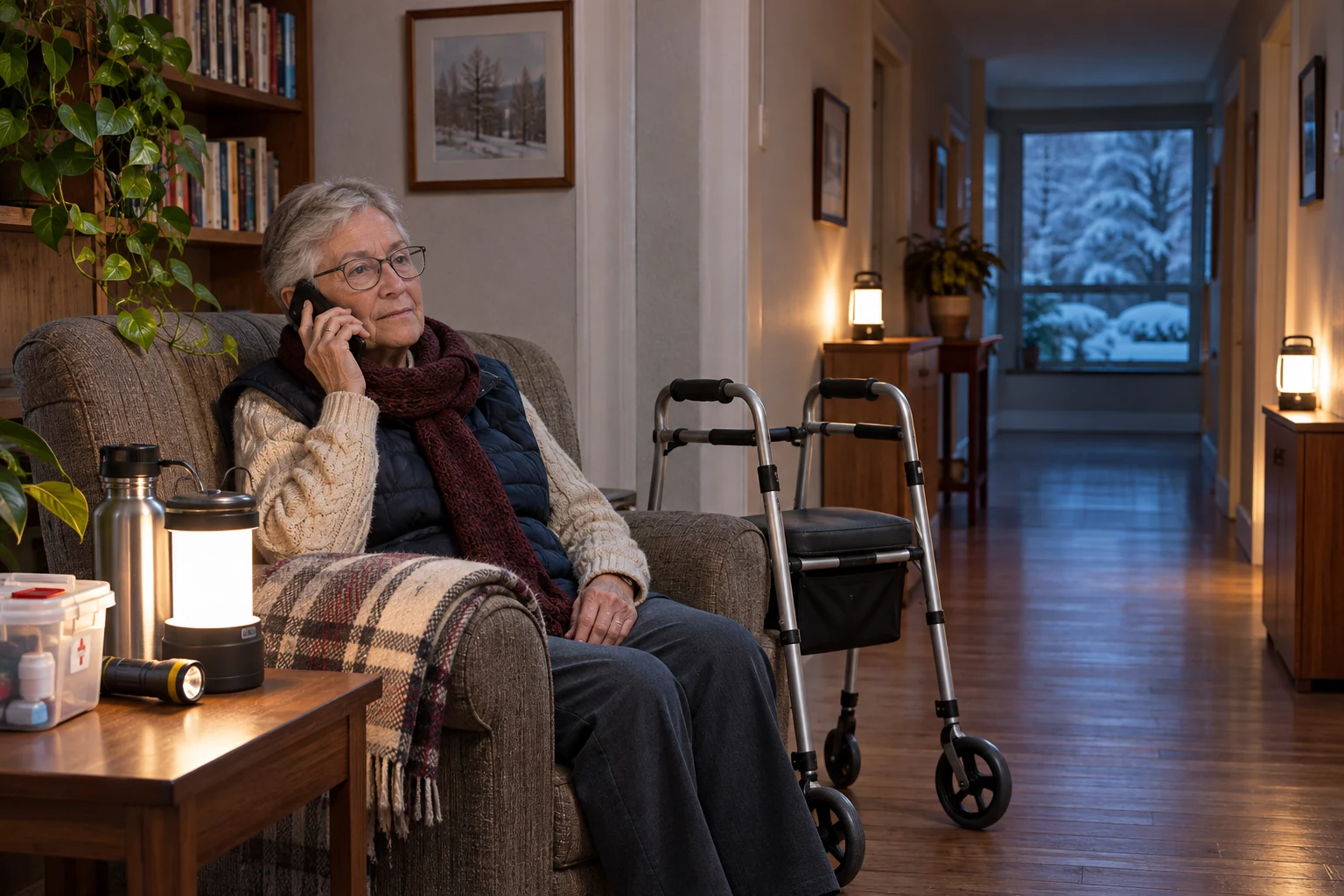
Prepping at a glance
- Cold, darkness, and isolation can compound each other.
- Arrange help and transport before conditions worsen.
- Treat suspected hypothermia as an emergency.
Look beyond the thermostat
Winter power outage health risks include more than discomfort from losing heat. Darkness can make movement harder, outdoor surfaces may be slippery, and isolated households may have difficulty reaching help. Start by listing who would have the most trouble keeping warm, moving safely, communicating, or maintaining essential care.
Cold weather preparedness should include a realistic alternative location. Ask whether a relative, friend, or officially announced warming location can meet your needs, and how you would get there. Confirm accessibility, medication support, and transport rather than assuming that any open building will be suitable.
Make the home easier to navigate
Place working battery lights where people normally walk and keep needed mobility aids within reach. Clear clutter from paths and identify loose rugs or trailing cords that become harder to notice in low light. Keep supplies accessible so finding a blanket does not require climbing or moving heavy boxes.
Discuss outdoor tasks before a storm. Who can clear a route safely, and what happens if that person is unavailable? Avoid making an unnecessary trip across ice simply to complete a household chore. If someone needs physical help, arrange it specifically rather than expecting an untrained neighbor to improvise lifting or carrying.
Plan warmth without adding another hazard
Keep dry clothing and suitable blankets accessible, and follow safe instructions for any installed heating equipment. CDC outage guidance warns against using a gas range or oven for home heating. Outdoor cooking appliances and fuel-powered generators do not belong indoors or in enclosed or partly enclosed spaces.
Do not let a supply of blankets become a reason to remain in an unsafe situation. A winter emergency plan should identify when essential needs can no longer be met and who can help arrange a move. Discuss individual health and powered-equipment requirements with the relevant care team before an outage.
Recognize when cold becomes urgent
The CDC identifies hypothermia as a medical emergency. Warning signs can include shivering, confusion, slurred speech, unusual drowsiness, and poor coordination. If hypothermia is suspected, seek emergency medical help immediately; do not wait for every sign to appear or dismiss changes as ordinary tiredness.
Move away from the cold if it is safe and follow emergency instructions. A general preparedness article is not a substitute for assessment or treatment. Keep the local emergency number and the information needed to describe your location available on paper as well as on a phone.
Connect check-ins with actual assistance
Agree on a check-in arrangement with someone who has consented to help. Specify what a missed check-in means and what the helper can realistically do. A message saying everything is fine should reflect actual warmth, mobility, and care needs, not just whether the person has food in the pantry.
After an outage, review which part of the plan caused the most difficulty. Improve that part before adding more equipment. A better light location, clearer transport agreement, or earlier care-provider conversation may be more useful than increasing the size of the winter supply bin.
