
Prepping at a glance
- Never bring outdoor fuel-burning equipment indoors.
- An alarm requires action, not investigation.
- Choose a safe alternative if backup heat is unsuitable.
Make the response clear first
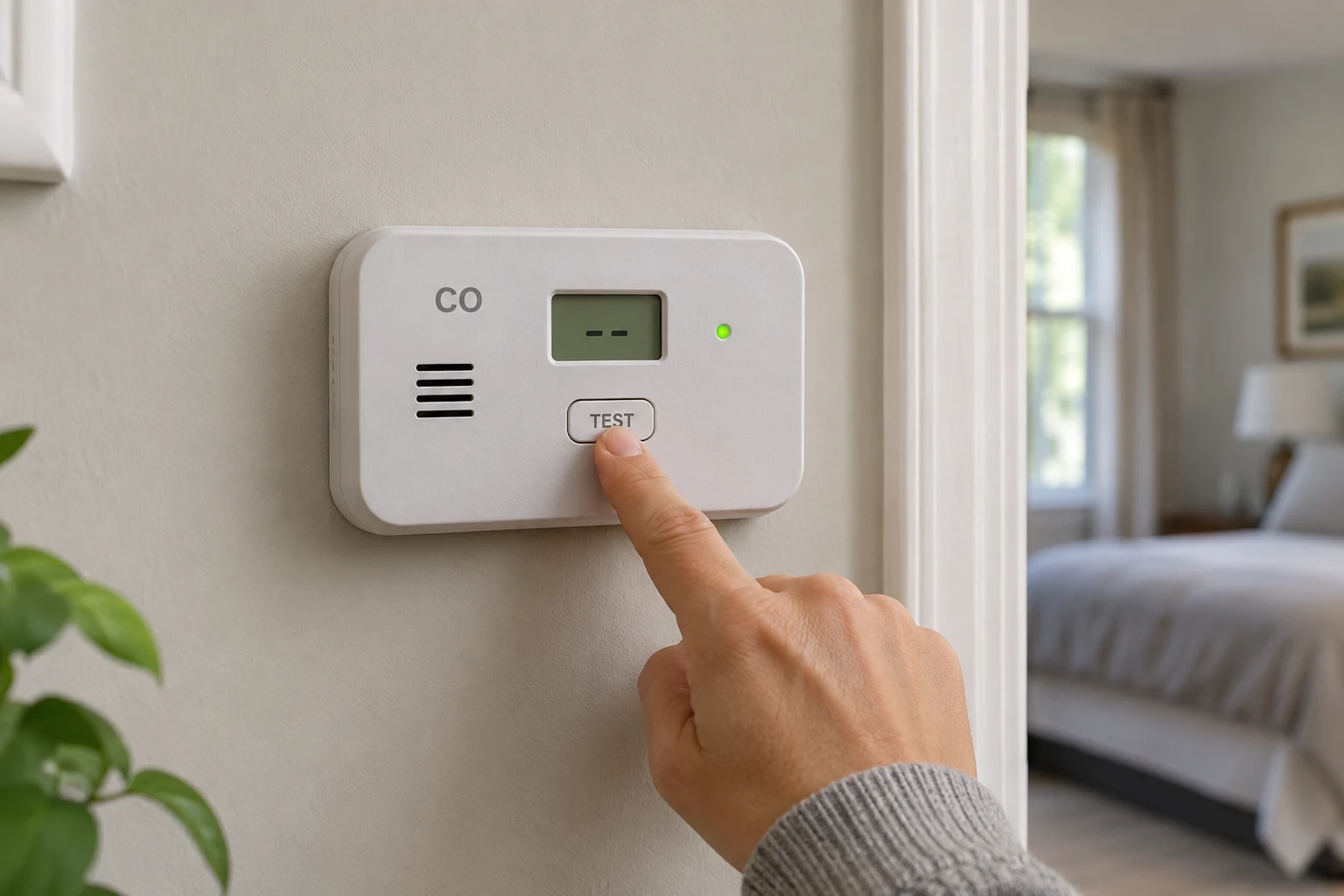
Carbon monoxide safety matters during an outage because improvised heat and power can introduce a deadly hazard. Carbon monoxide cannot be seen or smelled. If a carbon monoxide alarm sounds, get everyone outside to fresh air immediately and call emergency services from there. Do not stay inside to locate the source or reset the device.
The CPSC carbon monoxide fact sheet explains symptoms and response. Headache, dizziness, nausea, weakness, or confusion can be warning signs; suspected exposure requires urgent help. Do not re-enter until emergency responders say it is safe. An absence of symptoms is not a reason to ignore an alarm.
Mistake one: treating an open door as ventilation
Generator safety requires a suitable outdoor location. A garage with an open door, a basement, a shed, or another partly enclosed space is not an acceptable workaround. CPSC guidance says portable fuel generators belong outside at least twenty feet from the home, with exhaust directed away from it and other buildings. Follow the equipment instructions and applicable local requirements too.
Evaluate the location before buying or starting the equipment. If your property cannot provide a safe arrangement, choose another power or relocation plan. A longer extension cord alone does not establish a complete safe installation; use appropriately rated equipment and qualified help for household electrical connections.
Mistake two: cooking equipment becomes a heater
Do not use a gas oven or range to heat the home, and do not bring a charcoal grill or outdoor camping stove inside. The CDC's outage advice specifically addresses these hazards. Opening a window does not turn outdoor equipment into an indoor heater.
Write down the heating option you can actually use safely, including its operating limits and maintenance needs. If that option is unavailable or the home becomes unsafe, arrange a warmer destination. Planning transport and a place to stay is a legitimate backup; improvised combustion is not required to prove self-reliance.
Mistake three: assuming alarms need no attention
Check the instructions for every carbon monoxide alarm in your home, including placement, testing, backup power, and replacement. Record model and replacement information somewhere accessible. A device that is unplugged, expired, incorrectly placed, or missing its backup supply may not provide the protection you expect.
Consider whether everyone can perceive the warning, including people with hearing needs or those sleeping in another area. Select appropriate equipment and arrangements with qualified advice where needed. Learn the manufacturer's distinction between a maintenance signal and an alarm during normal conditions, while treating a possible CO warning as urgent.
Put the safe choice on paper
Make a short household card: permitted backup equipment, safe operating location, alarm response, emergency contacts, and alternative shelter. Explain it to everyone who might start the equipment. Keep the manufacturer's instructions with the plan rather than relying on one person's memory.
After any equipment change, revisit the arrangement. Check whether windows, vents, nearby buildings, or storage have changed the operating space. A purchase is only one part of preparation; the household needs a safe place to use it and a clear decision to stop when those conditions cannot be met.
