
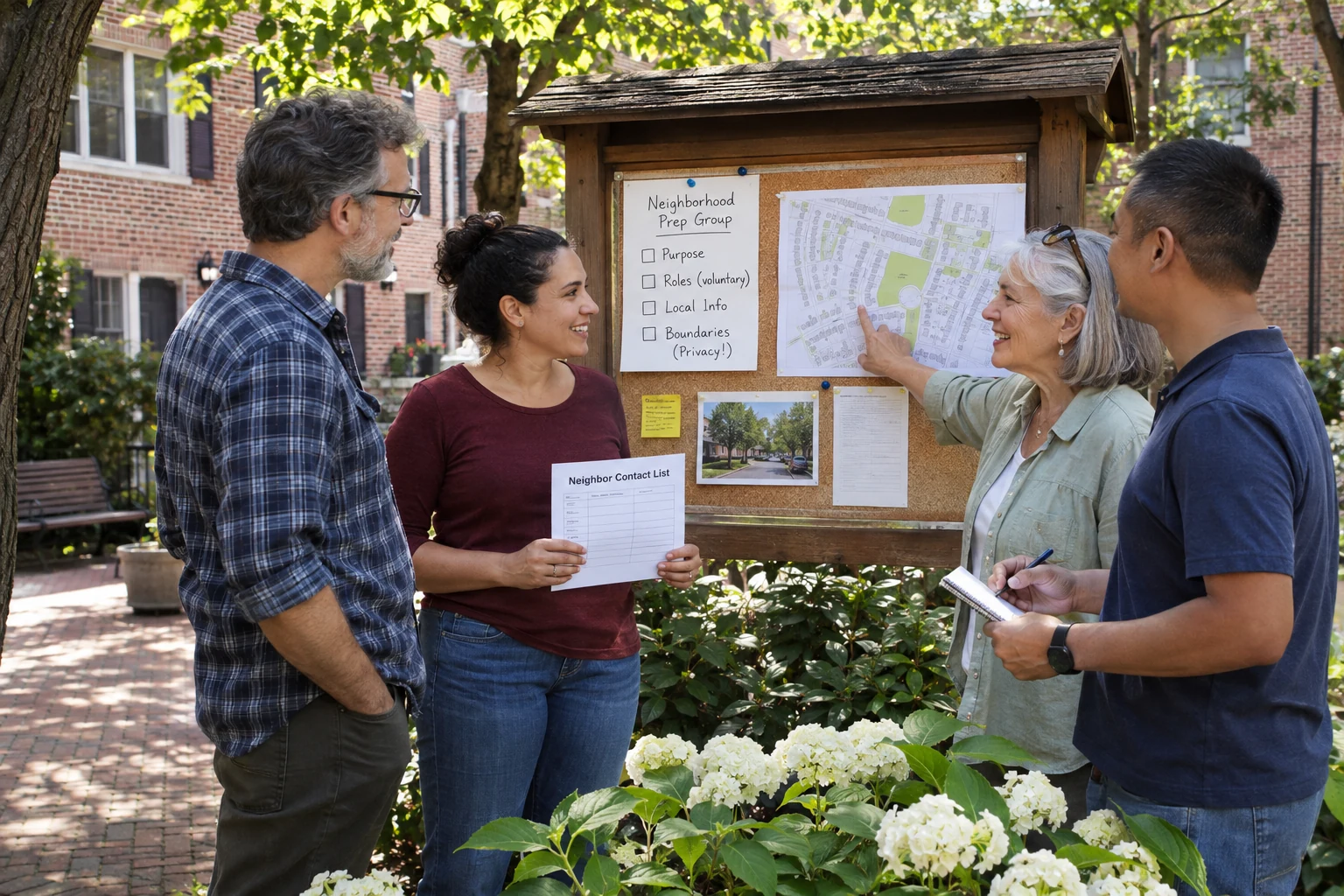
Prepping at a glance
- Begin with one useful shared task.
- Make participation voluntary and specific.
- Use official training for specialist roles.
Start with a practical invitation
Neighborhood emergency preparedness can begin with two or three people comparing useful local information. Invite neighbors to a short conversation about a specific topic, such as alerts, transport options, or checking on people who request help. Avoid opening with demands for personal supply lists or alarming predictions.
Choose an accessible time and place, and explain that participation is voluntary. People may have different budgets, schedules, languages, abilities, and comfort levels. A group becomes more useful when it allows modest contributions rather than expecting every household to prepare in the same way.
Choose one result for the first meeting
Keep the first goal small enough to finish. You might assemble verified local emergency contacts, learn how official alerts are issued, or identify training opportunities. Community emergency preparedness works better when a meeting produces a usable result instead of a long list of promises no one owns.
FEMA's community preparedness facilitator guide can provide structure for discussion and activities. Adapt it to the people present and check current local arrangements with emergency management. A neighborhood group should support official response systems, not present itself as an authority with powers or capabilities it does not have.
Agree on roles and limits
Ask what people are willing and able to do. Someone may share official notices, another may organize a meeting, and another may check on a neighbor who has specifically requested it. Record a backup for tasks that would otherwise depend on a single person.
Do not assign medical, rescue, security, or hazardous utility work to untrained volunteers. Direct people interested in specialist roles to recognized local training and programs. Make clear that volunteers should not enter unsafe locations or delay their own evacuation to carry out a neighborhood task.
Keep information proportionate
A neighborhood disaster plan may need contact preferences and agreed assistance arrangements, but it does not require publishing private medical histories or the contents of every home. Collect only information needed for the agreed purpose, limit access, and let participants correct or remove their details.
Choose a communication method people can use and a fallback for those without the same technology. Define how messages will be checked before forwarding. Official instructions should retain their source and date; a rumor in a group chat should not become a neighborhood evacuation direction.
Practice and maintain the small system
Try a clearly labeled practice check-in or a short discussion of an ordinary outage. Ask whether the contact method worked and whether the task assignments remained realistic. Keep the exercise low-risk and voluntary, with no surprise emergencies or interruption of essential services.
End by choosing one owner and a review date for the next useful improvement. Update contacts when people move or withdraw, and keep promises within the group's actual capacity. A small, respectful network that shares accurate information and agreed help can be valuable without becoming a complicated organization or collecting an extensive database of private details.
