
Prepping at a glance
- Organize supplies by task rather than package count.
- Keep personal medicines separate and appropriately secured.
- Pair the kit with training and a replacement routine.
Use a basic list as a starting point
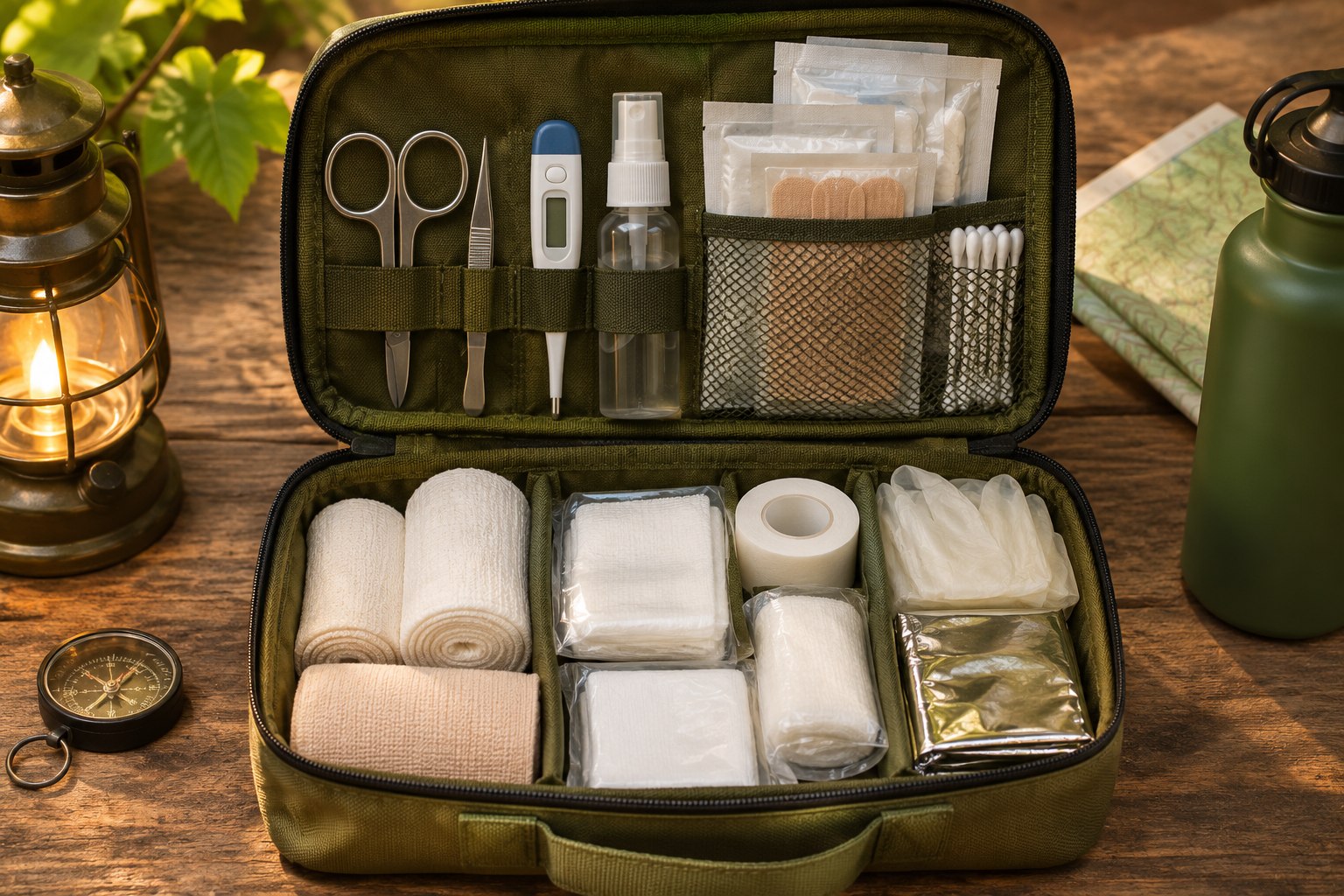
A first aid kit checklist should support familiar first aid tasks, not imitate a clinical treatment room. Begin with appropriate dressings, adhesive bandages, gauze, tape, protective gloves, and practical tools such as suitable scissors. The American Heart Association’s published first aid kit table provides a reference for basic supplies. Adapt quantities to household size and how quickly you can replace used items.
Do not judge a commercial kit by its total piece count. A large number of tiny bandages can make a package sound comprehensive while leaving little useful variety. Read the contents and check whether sizes, packaging, and instructions fit the people who will use them. Avoid unfamiliar invasive equipment that exceeds your training.
Separate routine care from personal needs
Household first aid supplies should account for allergies, skin sensitivities, and the ages of the people involved. Ask a clinician or pharmacist about medicines appropriate for your household rather than filling the kit with products recommended to strangers online. Keep original labels and follow storage and child-safety instructions.
Personal prescription medicines and medical devices need their own care plan. Do not assume a shared kit can replace them or that one person’s medicine is suitable for another. A concise contact card can list emergency numbers and the location of relevant care information without exposing unnecessary personal details. Make the kit recognizable to guests or caregivers who may be present when help is needed.
Make the layout easy to understand
Choose a container that protects supplies and can be opened by the intended user. Group items by function, with labels large enough to read. Keep frequently used minor-care supplies visible and any specialist items with clear instructions from training. Store the kit in an accessible place that still respects medication and child-safety requirements.
Ask another adult to find a dressing and gloves without guidance. If they must empty the whole container, simplify the layout. Keep a smaller travel kit for outings instead of routinely taking the household’s only supplies away. Record where each kit belongs so the car, home, and go bag do not gradually share one depleted collection.
Maintain supplies and practice the response
First aid kit maintenance means checking seals, condition, expiration dates where applicable, and missing items after use. Keep a short restock list inside the lid. Replace supplies that have been compromised rather than assuming an unopened-looking package remains suitable after moisture or damage. Review the kit after changes in household needs.
Take a recognized first aid course and keep the course reference available. Supplies do not replace emergency assessment or professional care. For serious injury, severe symptoms, or uncertainty about an immediate threat, seek emergency help and follow dispatcher instructions. Practice locating the kit and describing your address during a calm rehearsal. Those simple actions can make the equipment more useful than adding another unfamiliar item.
