
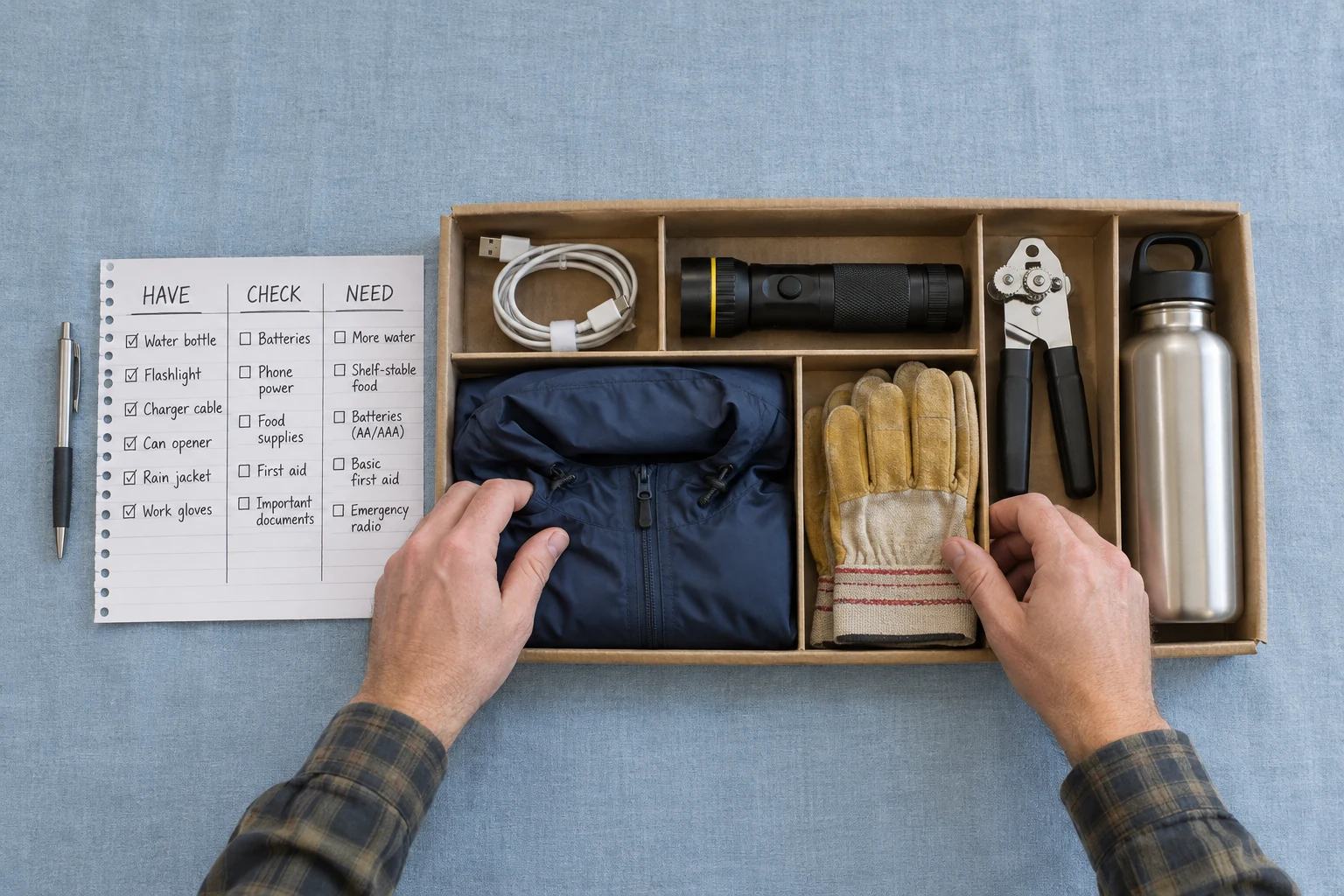
Prepping at a glance
- Inventory before shopping.
- Cover water, food, communication, and personal needs.
- Practice your plan and choose a review date.
Learning how to start prepping begins with your household’s actual needs. Follow these ten steps, using what you already own before deciding what to buy.
1. Identify your everyday risks
Write down three disruptions that matter where you live. Think about the weather you have experienced, how reliable your utilities are, and whether roads sometimes become difficult to travel. Your local emergency management office is a useful place to learn about area hazards and alerts.
Next, think through a normal day. What depends on electricity, running water, transport, or an open store? Include people who need help, pets, and anything you would need to take with you if you had to leave.
What could be interrupted?
- Power, water, or heating and cooling.
- Access to groceries and deliveries.
- Your usual route to work or school.
Who needs what?
- Food, clothing, and personal supplies.
- Mobility or communication support.
- Pet care and transport arrangements.
Choose one scenario to work through first. A plan you can explain and practice is easier to maintain than a long shopping list with no clear purpose.
2. Inventory what you already own
Gather useful lights, chargers, household supplies, and documents before making a shopping list. Check that the items work and write down their storage locations. A household emergency plan becomes easier to follow when everyone knows what is already available.
3. Set your water goal
For water, the CDC recommends at least one gallon per person per day for three days, and a two-week supply if possible. Allow more for pets, hot conditions, pregnancy, or illness. Four people would need at least 12 gallons for that first three-day baseline, before those extra needs.
Unopened commercial bottled water is a straightforward starting option. If you fill your own containers, follow the CDC’s container-cleaning and storage guidance and replace that stored water every six months. Keep supplies somewhere you can reach and carry them safely.
4. Plan familiar meals
Make a short meal plan
Pick shelf-stable foods your household already eats, including options that need no cooking. Sketch out a few days of meals and check portions, dietary needs, and whether you need a manual can opener. Label a shelf or box so supplies are easy to find.
5. Agree on contacts and meeting places
Agree on how you will contact each other and where you will meet if you are separated. The American Red Cross emergency-planning guide recommends meeting places near home and outside your neighborhood, plus an out-of-area contact.
Put important numbers on paper as well as in your phone. Discuss who will help children, older relatives, or anyone who needs assistance. Plan how pets will travel and where they can stay. Walk through the plan together so everyone understands their part.
Know how to receive local alerts and follow official instructions during an emergency. Review your workplace and school arrangements too; your household may be in several different places when a disruption begins.
6. Organize your emergency supplies
Check what you own before shopping. Keep essential items together, and choose a container that household members can open and move. The Michigan emergency kit checklist is a helpful starting reference to tailor to your needs.
- Light: a flashlight or headlamp, with the batteries it needs.
- Information: a battery-powered radio and a written contact list.
- Communication: charging cables and a charged phone power bank.
- Personal care: basic first aid, hygiene supplies, and spare glasses if needed.
- Daily essentials: appropriate clothing, pet supplies, and copies of important documents kept securely.
If someone relies on medication, refrigerated medicine, or powered medical equipment, arrange a backup plan with their pharmacist, clinician, or equipment provider. Build that plan around the person’s actual needs.
7. Prepare to leave home
Keep a portable set of essentials ready for leaving home, separate from supplies that are too heavy to carry. Try lifting and carrying your bag before deciding it is ready.
Choose a destination and a backup, arrange transport, and check accommodation for pets or accessibility needs before you need them. Follow evacuation instructions from local authorities; supplies are not a reason to delay leaving an unsafe location.
8. Choose a sustainable budget
Choose an amount you can comfortably set aside after your regular expenses. One week might be for water; another for batteries or pantry items. Some useful steps, such as writing down contacts or sorting supplies, cost nothing.
Keep a short inventory with three columns: what you have, what is missing, and what you will do next. Before buying equipment, decide where it will live, who will use it, and what maintenance it needs.
9. Practice finding and using essentials
Try a short household walkthrough. Find the flashlight, locate your contact list, and check that everyone knows where the supplies are. Practice opening the radio and finding its instructions. Keep normal utilities and essential equipment running during practice.
Write down what was missing or awkward. Perhaps a bag was too heavy, a battery did not fit, or a contact number had changed. Those small discoveries give you a concrete list of improvements.
Put a recurring review on your calendar. Check dates and equipment instructions, recharge devices as needed, replace used supplies, and revisit the plan when your household or the season changes. A first aid course is another useful next step when you are ready to add skills.
10. Schedule your next review
Write a review date on your calendar and give each unfinished task an owner. Start with one realistic improvement from your walkthrough. Prepping for beginners is easier to maintain when progress is measured by solved problems rather than the size of a stockpile.
Review sooner if your household, medication, address, or travel arrangements change. Keep the plan current enough that another family member could use it without asking you where everything is.
