
Prepping at a glance
- Work in short sessions.
- Use catch-up days without adding more tasks.
- Finish with a household walkthrough.
Choose a pace you can repeat
A 30 day prepping plan is a suggested schedule, not a deadline for becoming ready for everything. Give each session about ten minutes and stop when the task is complete. If a job needs research, make finding the next reliable contact today's task rather than trying to solve the whole problem at once.
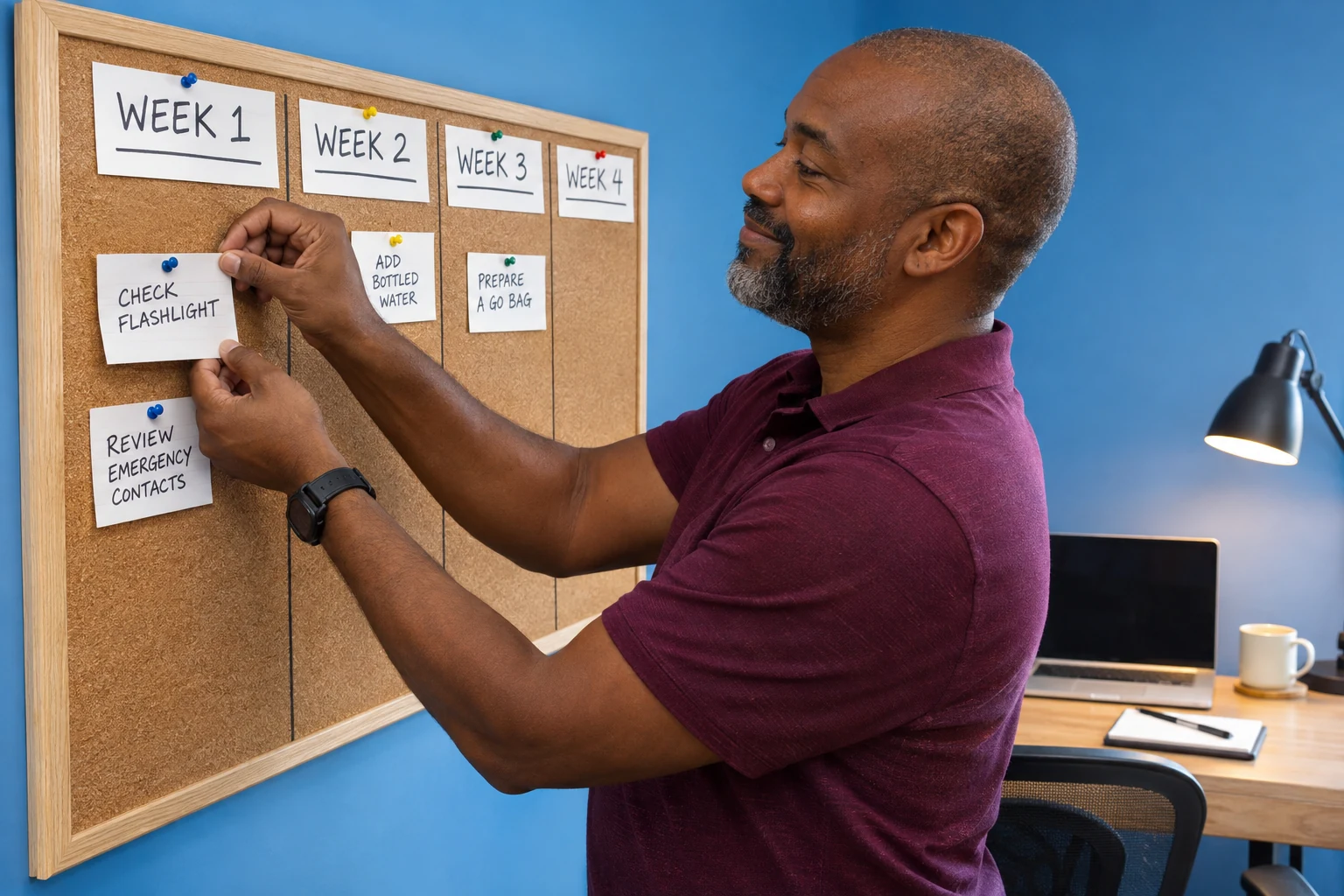
Put the schedule somewhere visible and cross out days that do not fit your life. Prepping for beginners should leave room for work, caregiving, disability, and limited money. You can spread this month of activities over a longer period without losing the benefit of any completed step.
Days 1–7: understand your starting point
Day 1: write the three interruptions most relevant to your household. Day 2: list who depends on you, including pets. Day 3: find local emergency alerts. Day 4: locate working lights. Day 5: gather useful charging cables. Day 6: inspect your existing pantry. Day 7: catch up or rest.
Keep one sheet with the headings available, missing, and needs advice. Do not turn every discovery into a purchase. If someone needs a medical backup arrangement, write down the appropriate provider to contact. Your emergency preparedness plan should reflect needs you have confirmed rather than assumptions from a generic shopping list.
Days 8–14: make everyday needs easier
Day 8: choose a water-storage location. Day 9: calculate the first water goal using the CDC guidance below. Day 10: identify familiar meals that need no cooking. Day 11: check opening and serving supplies. Day 12: list personal hygiene needs. Day 13: choose one affordable gap to fill. Day 14: catch up.
Keep the tasks distinct. Calculating a goal does not require buying the whole quantity that day. Similarly, making a meal list can reveal useful food already in the cupboard. Write the next purchasing step only after checking available space, carrying ability, and the household budget.
Days 15–21: organize people and information
Day 15: write important phone numbers on paper. Day 16: ask an out-of-area person about being a contact. Day 17: agree on meeting arrangements. Day 18: review school or workplace procedures. Day 19: discuss transport and assistance. Day 20: organize essential documents securely. Day 21: catch up.
Use the Red Cross planning guide for the conversation. Give each participant one decision to help make, such as where a contact card belongs or who can help with a pet. If someone cannot attend, follow up directly. A plan that was never explained to its participants is still only a draft.
Days 22–30: practice and close the loop
Day 22: gather a portable set of essentials. Day 23: test its weight. Day 24: check equipment instructions. Day 25: find the written contacts without using your phone. Day 26: walk through the plan together. Day 27: record the awkward parts. Day 28: fix one. Day 29: choose a review date. Day 30: acknowledge the tasks you completed.
End with a short remaining list, not a new month of mandatory purchases. Separate urgent personal needs from optional improvements. Keep utilities and essential equipment operating during practice. The achievement is a more usable household system and a manageable next step, even when some boxes remain unchecked.
